Last updated November 18, 2026




Free written scope consultation - allowances, timeline, and change-order rules on paper before a single trade is scheduled
The Complete Fence Installation Guide for Plano Homeowners
About one in four fence projects in Plano hits a stop-work situation that was entirely avoidable: a property line nobody verified, an HOA that wanted a specific post cap style, a city setback that wasn’t checked before the first post hole was dug. The fence goes up fast. The paperwork argument that follows goes slow, and sometimes it ends with a tear-down order and a neighbor who stops waving. This guide walks you through every step in the right order, starting with the approvals you need before a single post hole is dug in Plano.
Quick Answer
A Plano fence installation runs $4,200 to $9,800 for a typical 150- to 200-foot residential lot, with cedar privacy fencing landing around $28 to $42 per linear foot installed. The work itself usually takes two to four days, but the approvals that come first (survey, HOA, city permit where required) can add two to six weeks. Get the approvals in order before you buy a single board; that’s the difference between a fence and a fight.
Styles & brands we work with
- Kitchen remodeling
- Bathroom remodeling
- Home additions & ADU
- Roofing
- Windows & doors
- Driveway & pavers
- Fence
Table of Contents
- The Right Order of Operations for a Plano Fence Project
- How Plano’s Fence Ordinance and HOA Rules Stack Together
- Wood, Cedar, Aluminum, or Vinyl: What Survives North Texas
- Why Post Depth and Footings Matter More in Plano’s Clay Soil
- Good Neighbor Fence Orientation in Collin County
- What Fence Installation Costs in Plano
- How to Vet a Fence Contractor in Plano
- Realistic Timeline From First Call to Final Walk-Through
The Right Order of Operations for a Plano Fence Project
Most fence problems start with work done out of sequence. A homeowner picks a style, hires a crew, and finds out three days in that the HOA doesn’t allow that height or the plat survey shows the line is two feet off. Here’s the order that avoids the mess:
- Pull your plat survey. It’s usually in your closing documents or filed with Collin County. It shows exactly where your property lines run. If you don’t have it, a licensed surveyor can mark the corners for a few hundred dollars.
- Read your HOA covenants before you shop. Plano has dozens of HOAs, and many of them regulate fence height, material, color, and even the style of post cap. Get it in writing.
- Check the city ordinance. Plano’s fence rules set height limits that vary by zoning and by whether the fence is in a front, side, or rear yard. Confirm your lot’s limits before you design anything.
- Talk to your neighbor. A five-minute conversation about the shared line, the finished-side orientation, and the construction schedule prevents most disputes before they start.
- Get written proposals. Every bid should list linear footage, material, post spacing, footing depth, and who pulls any required permit. Compare apples to apples.
- Build. Only now does the first post hole get dug.
In our experience, skipping step one or two is what turns a straightforward Plano fence into a stop-work order. The approvals cost far less than a rebuild.
How Plano’s Fence Ordinance and HOA Rules Stack Together
Plano’s city code sets the legal ceiling on fence height, and it does so by zoning and by yard location. In most single-family residential zones, rear and side yard fences top out around six feet, while front yard fences are held lower and often require additional setback from the property line. Specific limits can change, so confirm the current numbers with Plano’s planning department for your address before you finalize a design. That’s the city’s floor, not the whole story.
HOA rules layer on top of city code, and here’s the part homeowners miss: your HOA can be stricter than the city, never looser. A Plano HOA might cap fences at six feet when the city allows more, mandate a particular material like cedar or a specific composite, ban chain link outright, require a certain stain color, or dictate the size and shape of post caps. Some associations review fence plans by committee and take two to four weeks to respond.
The practical rule: the stricter document wins. If the city says six feet and your HOA says five, you build five. If you build to the city limit and ignore the covenant, the city won’t care, but your HOA will, and HOA enforcement can require you to tear the fence down at your own cost.
- City code: the legal maximum by zoning and yard.
- HOA covenants: often stricter on height, material, color, and style.
- Plat survey: defines where the fence can legally stand.
- Neighbor agreement: covers orientation and shared cost on the line.
Wood, Cedar, Aluminum, or Vinyl: What Survives North Texas
North Texas is hard on fences. A Plano summer parks at 100°F for weeks, then an ice storm drops a half-inch of ice and a wind gust tests every post. Material choice should follow climate, not just looks.
Pressure-treated pine
The budget option at roughly $18 to $26 per linear foot installed. It handles heat fine but moves with moisture, so it cups, cracks, and grays. Expect 10 to 15 years with staining every few years. Fine for a rental or a short-term hold.
Cedar
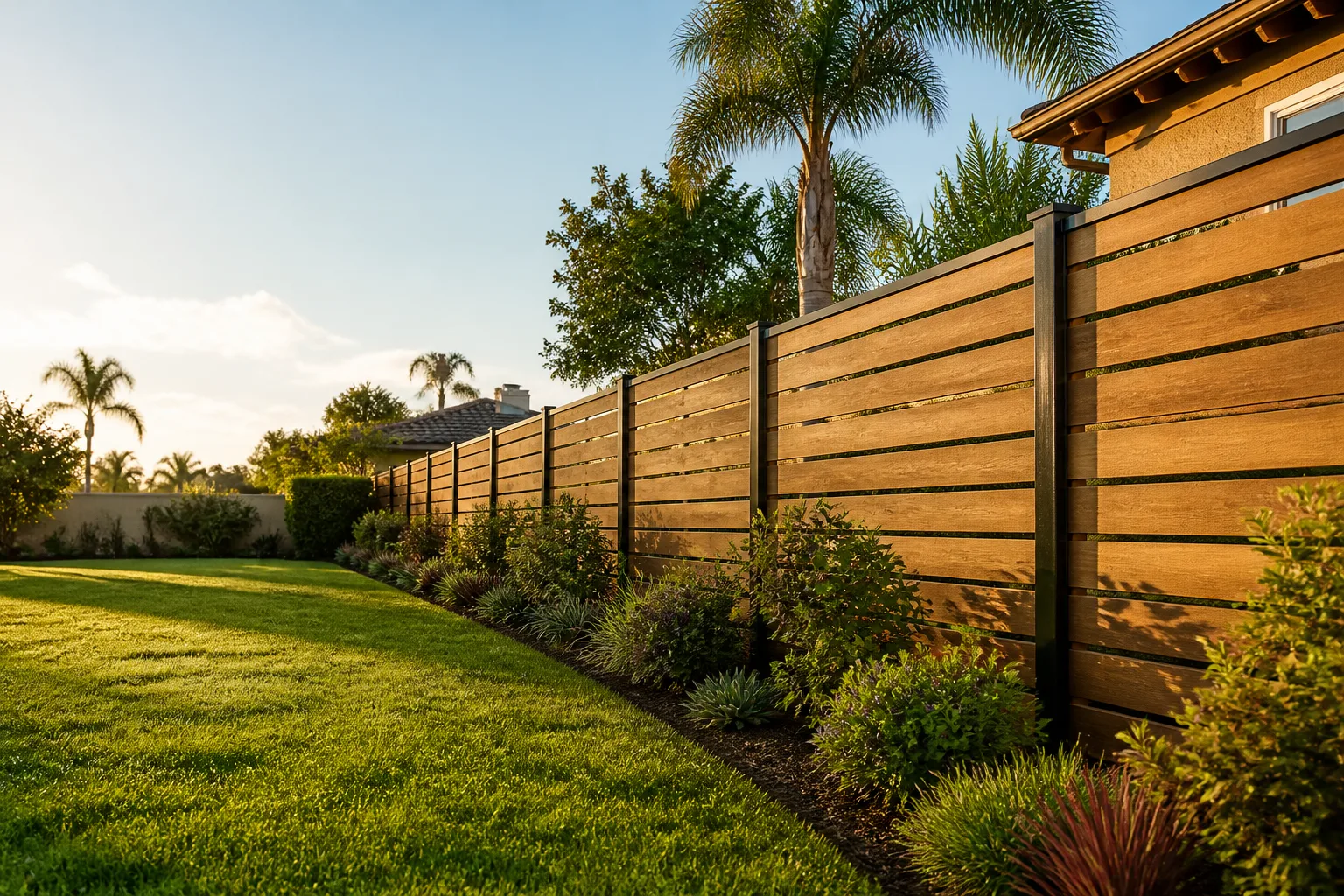
The North Texas standard for privacy fencing, around $28 to $42 per linear foot installed. Cedar resists rot and insects better than pine and holds stain longer. It still needs a reseal every three to five years to survive the UV. Most Plano privacy fences are cedar for good reason.
Aluminum
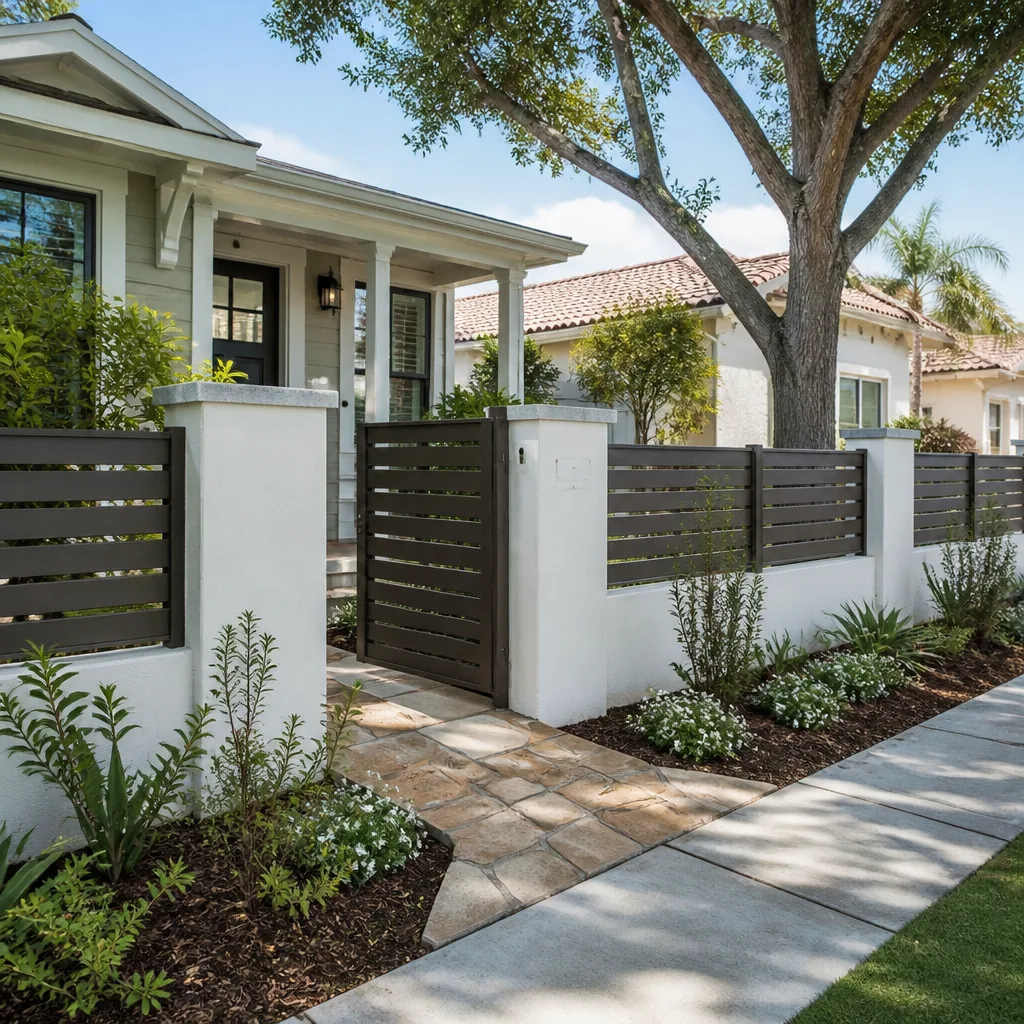
Roughly $32 to $48 per linear foot installed. It won’t rot, warp, or feed termites, and it shrugs off a Plano ice storm. It’s an open-view fence, so it’s better for front yards and pool barriers than for privacy. Powder-coated finishes hold up well through the heat.
Vinyl
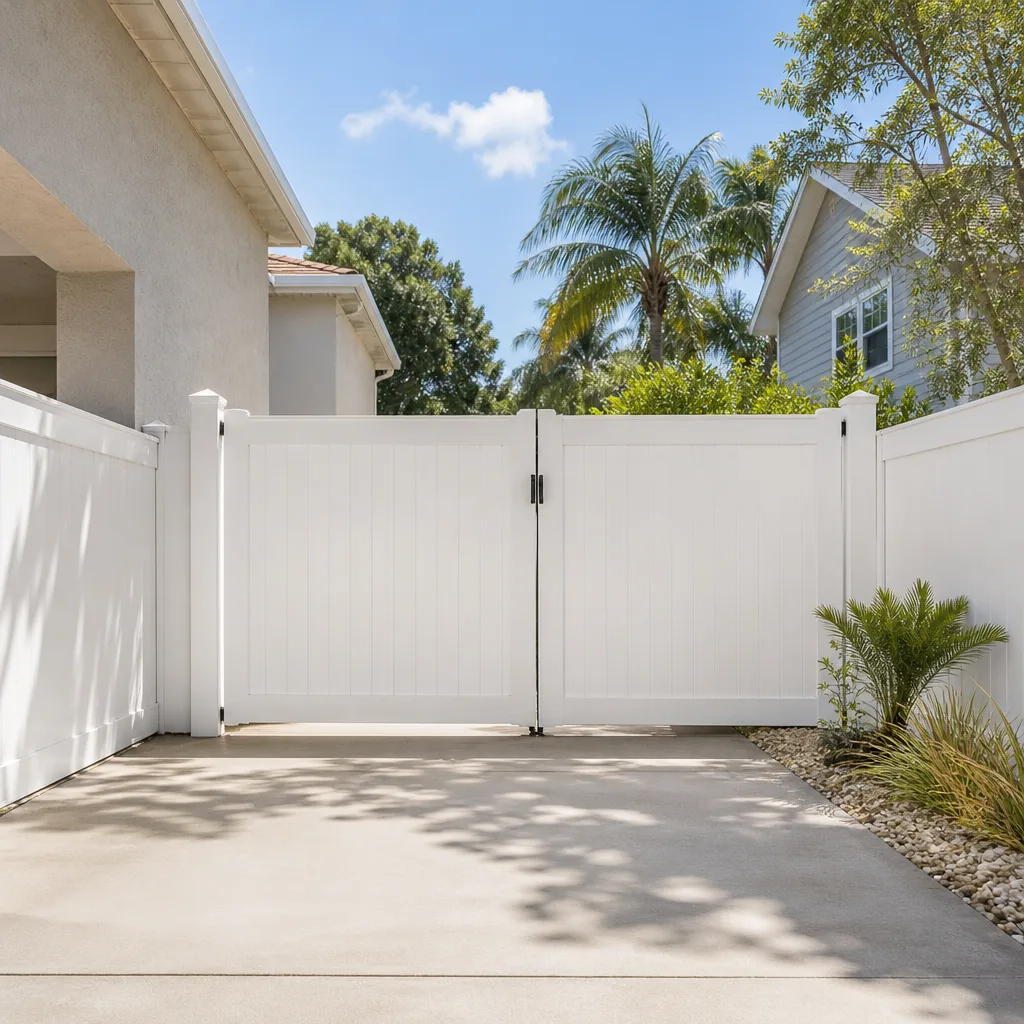
Around $30 to $45 per linear foot installed. Vinyl stays bright through the summer and never needs paint. The catch: cheaper vinyl gets brittle in extreme heat and can crack under hail, so grade matters. Good vinyl lasts decades; thin vinyl is a three-year headache.
Whatever material you pick, ask what brand and grade. We install known products you can look up, the same way we use GAF and CertainTeed on roofs, not mystery materials off a van.
Why Post Depth and Footings Matter More in Plano’s Clay Soil
Plano sits on expansive clay soil, the kind that swells when it’s wet and shrinks when it’s dry. That shrink-swell cycle is brutal on fence posts, because a post set too shallow will heave, lean, and eventually fail long before the wood rots. This is why a fence that looks fine in year one can be leaning in year four.
Deep concrete footings are the fix. Industry practice and local code guidance generally call for posts set well below the frost line, with footings sized to the post and the soil, often 24 to 36 inches deep and 10 to 12 inches in diameter for a six-foot privacy fence. Some Plano builders go deeper on clay-heavy lots. The concrete collar needs to extend below the active soil zone so the clay grips the footing instead of lifting the post.
- Depth: 24 to 36 inches for a standard six-foot fence; deeper on problem lots.
- Diameter: 10 to 12 inches, wider than the post for a solid collar.
- Post spacing: 8 feet on center is standard; tighter on windy, exposed lots.
- Drainage: crown the concrete slightly so water runs off, not into the wood.
Ask any contractor you interview for the footing depth in writing. A bid that says “posts in concrete” without a number is a bid that won’t hold up to Plano clay. Get the scope and the footing spec on paper before anyone digs, and make sure any change to it arrives as a written change order.
Good Neighbor Fence Orientation in Collin County
Here’s the question that starts more fence disputes in Plano than anything else: which way does the finished side face? The legal reality in Texas is that there’s no statewide rule forcing a fence’s good side toward the neighbor. It comes down to local ordinance, HOA covenants, and whatever you and your neighbor agree on. Many Plano subdivisions have deed restrictions that require the finished side to face outward, toward the neighbor or the street. Check yours.
The practical reality is simpler: the conversation matters more than the code. Before you build on a shared line, walk over and talk through three things:
- Location. Confirm the shared line with the survey so neither of you builds on the other’s land.
- Orientation. Agree on which side faces which yard, and put it in writing even informally.
- Cost and maintenance. Texas doesn’t require a neighbor to split the bill, but many Plano homeowners do split a shared-line fence. Decide up front who pays for repairs.
A short, friendly chat avoids the slow, expensive version of the same discussion. Get the agreement in writing, with the scope and any cost sharing spelled out. A fence on a property line is a shared structure; treat it that way from the start.
What Fence Installation Costs in Plano
Fence pricing in Plano tracks material, linear footage, terrain, and how many gates you add. Here’s a realistic line-item range for a typical residential lot, so you can read a bid with confidence:
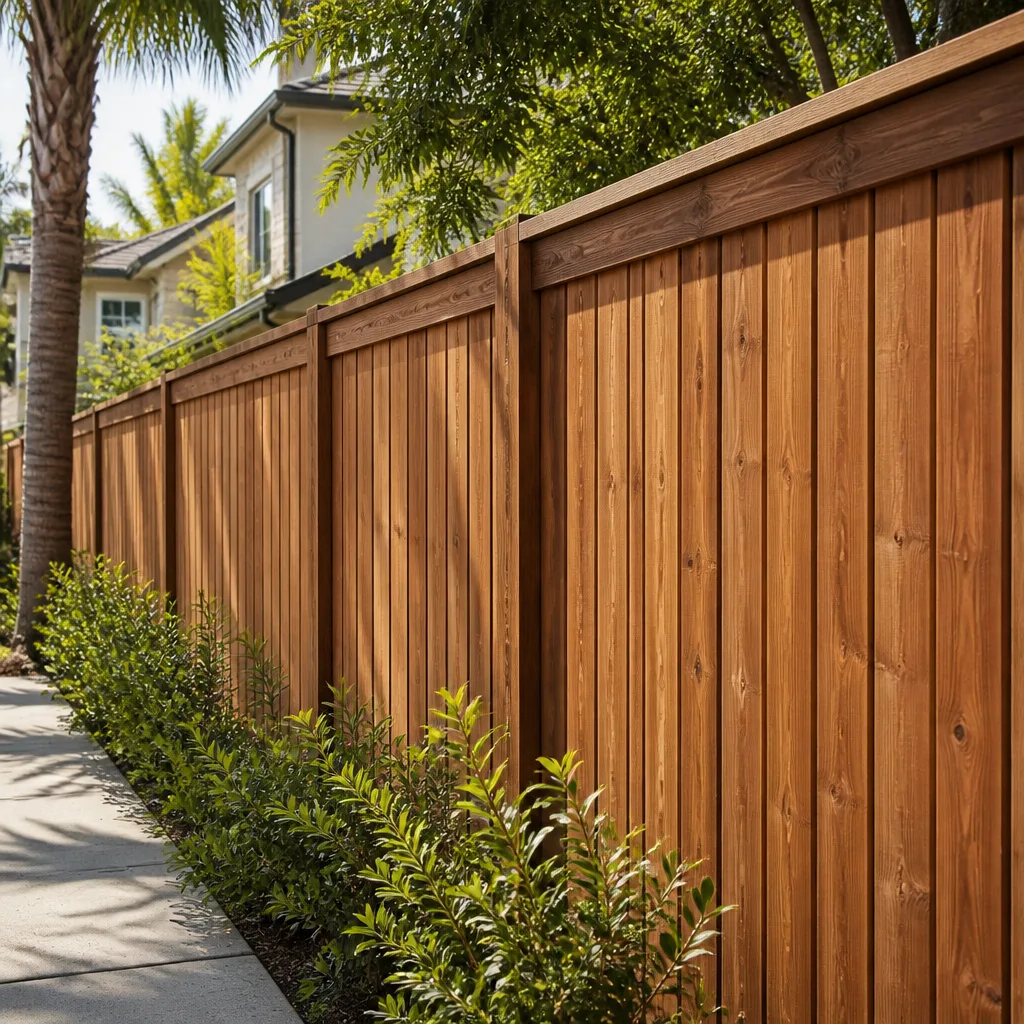
- Cedar privacy fence, 6 ft: $28 to $42 per linear foot installed.
- Pressure-treated pine, 6 ft: $18 to $26 per linear foot installed.
- Aluminum, 4 to 5 ft: $32 to $48 per linear foot installed.
- Vinyl, 6 ft: $30 to $45 per linear foot installed.
- Typical 150- to 200-foot lot total: $4,200 to $9,800.
- Single walk gate: $150 to $400; double drive gate $500 to $1,200.
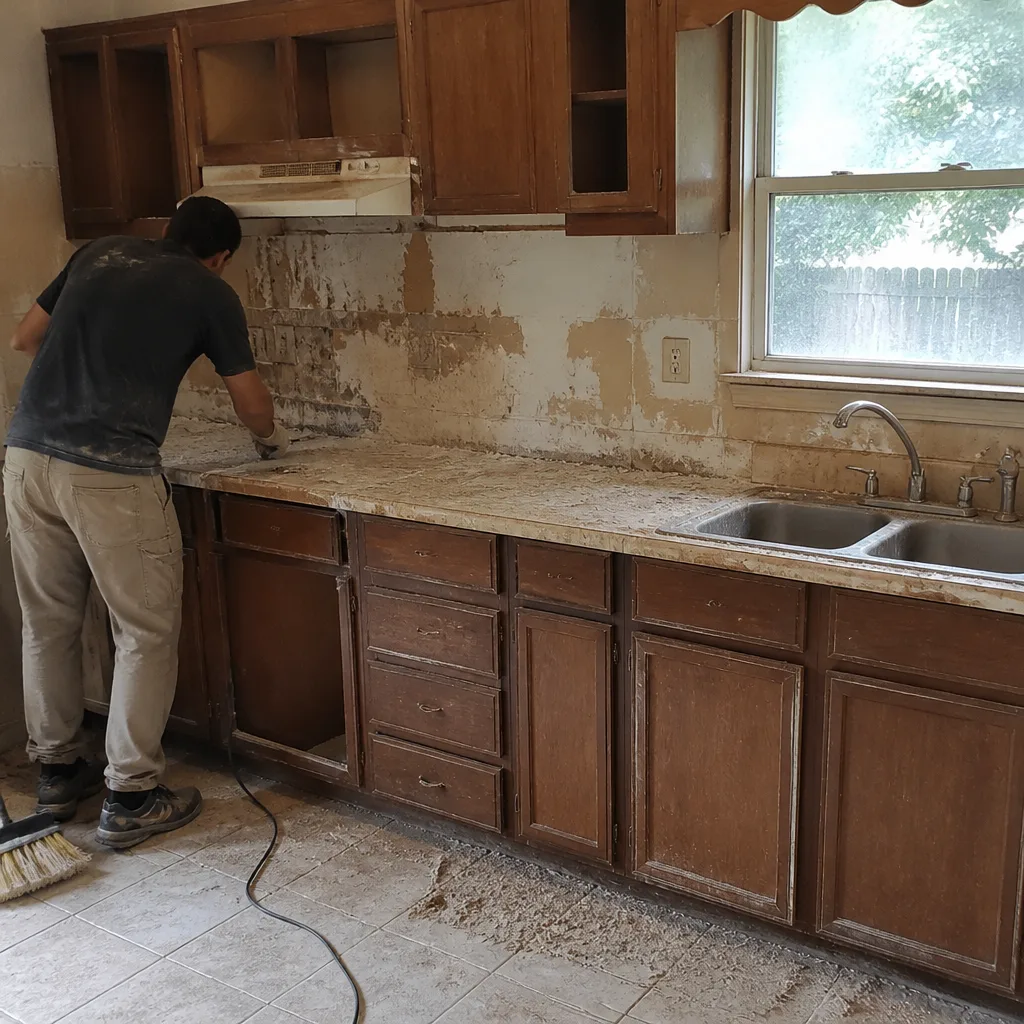
- Removal and haul-off of an old fence: $300 to $900 depending on length and condition.
Why the spread? Post depth and concrete volume vary with soil, gate hardware varies with quality, and stain or seal adds a few hundred. A real estimate is line-itemed: footage, material grade, footing spec, gates, removal, permit, stain. If a quote arrives as one lump number with no breakdown, ask for the detail before you sign.
Other upgrades change the number too. A fence line that crosses a retaining wall, a slope, or a mature tree needs extra footing work. Corner posts and end posts need bracing. Ask for all of it in writing.
How to Vet a Fence Contractor in Plano
A fence is a structure you’ll live with for 15 years, so vet the contractor as carefully as the material. These are the checks that separate a real builder from a guy with a truck and a weekend:
- Verify the license and insurance. Texas doesn’t license general contractors, so ask for proof of insurance and a business registration you can look up.
- Get the scope in writing. Footage, material grade, post and footing specs, gates, removal, stain, and permit responsibility, all itemized.
- Ask who pulls the permit and who does the work. A real builder knows the answers and doesn’t subcontract the whole job to strangers.
- Require written change orders. Any change to scope or price should arrive on paper before it happens, never as a surprise on the final invoice.
- Check the warranty in writing. A workmanship guarantee you can read and enforce beats a verbal promise every time.
- Read the reviews, then check the registration yourself. A license number published and verifiable is worth more than a sales pitch.
Barrett & Sons pulls permits and gets inspections signed on eligible jobs because the permit inspector works for you, not for the contractor. That’s the accountability you want on a fence.
Realistic Timeline From First Call to Final Walk-Through
Plano homeowners are usually surprised by how much of a fence project is waiting, not building. Here’s what a typical schedule looks like:
- Week 1: Pull the survey, read the HOA covenants, check the city ordinance.
- Weeks 1 to 4: Submit the HOA fencing request if required; committee review runs one to four weeks in most Plano associations.
- Weeks 2 to 3: Collect and compare written bids.
- Build week: Remove the old fence, dig and set footings, frame and hang panels, add gates, stain if included. Two to four days for a standard lot.
- Post-build: Address any punch-list items, then final walk-through and inspection sign-off where required.
Skip the front-end steps and the build can still take two to four days, but the argument about height, orientation, or permits can drag on for months. Do the approvals first and the rest stays on schedule.
Common Mistakes to Avoid
- Building before the survey is verified. A fence on the wrong side of the line is a trespass, and in Collin County it can be ordered removed. Confirm the corners first.
- Ignoring the HOA covenants until the fence is up. Plano HOAs can require a specific material or post cap, and enforcement can mean a rebuild at your expense. Read the rules before you shop.
- Assuming six feet is always allowed. Height limits vary by zoning and yard, and front-yard fences are held lower. Check the current Plano ordinance for your address.
- Letting the contractor set shallow posts. Plano clay will heave a 20-inch post out of the ground in a few seasons. Specify 24 to 36 inches and 10- to 12-inch footings in writing.
- Picking the cheap material for the heat. Pine looks like a bargain until it cups in the July heat. Cedar or quality vinyl holds longer in North Texas.
- Skipping the neighbor conversation. A five-minute chat about orientation and shared cost prevents the six-month dispute. Get it in writing.
- Accepting a one-line quote. A lump-sum bid with no footing spec or material grade is impossible to compare and easy to change later. Demand line items.
See the difference
 Before
 After
 Before
 After
 Before
 After
When to Call a Professional
Some fence jobs are genuinely DIY-friendly, and we’ll tell you so: a short gate repair, a single leaning post that just needs re-setting, a can of stain on a low, flat run of fence. But call a professional when the job involves a shared property line you need to verify, an HOA plan that needs a proper submittal, expansive clay soil where footing depth is critical, a fence over 150 linear feet, a slope or a tree line, or a permit that needs pulling and an inspection that needs signing. Those are the projects where a wrong call costs thousands. And if your fence is the last piece of a bigger plan, our Home Additions & ADU in Plano team can coordinate it. Barrett & Sons Construction Plano offers free estimates in Plano – call (877) 382-4108.
Frequently Asked Questions
Fence installation in Plano typically runs $4,200 to $9,800 for a 150- to 200-foot residential lot, or about $28 to $42 per linear foot for cedar privacy fencing. Aluminum runs $32 to $48 per linear foot and vinyl $30 to $45. Call (877) 382-4108 for an exact quote – estimates are free.
Plano’s ordinance generally caps rear and side residential fences around six feet in standard single-family zones, with front-yard fences held lower, but limits vary by zoning and yard location. Confirm the current rule for your address with the city, and remember your HOA can be stricter. Call (877) 382-4108 and we’ll walk through the approvals with you at a free estimate.
The permit requirement depends on fence height, location, and the specific project, so check with Plano’s planning department for your address before building. If a permit is required, a licensed contractor should pull it and get the inspection signed. Call (877) 382-4108 to ask about your project.
Texas has no statewide rule forcing the finished side toward your neighbor; orientation comes down to local ordinance, HOA covenants, and whatever you and your neighbor agree to. Many Plano subdivisions require the finished side to face outward. Decide it in writing with your neighbor before work starts. Call (877) 382-4108 with questions – estimates are free.
The build usually takes two to four days for a standard residential lot, but survey verification, HOA review, and any permit can add two to six weeks before work begins. Doing the approvals first keeps the schedule on track. Call (877) 382-4108 to plan your timeline.
It shouldn’t, and with us it doesn’t without a written change order. Every scope, allowance, and price change arrives on paper before work moves. If a bid is revised after the fact with no paperwork, walk away. Call (877) 382-4108 for a fixed, line-item estimate.
The Bottom Line
A fence in Plano is a construction project and a paperwork project at the same time. The order matters: verify the survey, read the HOA covenants, check the city ordinance, talk to your neighbor, then build. Choose material for North Texas heat and ice, and insist on deep footings for Plano’s clay. Get every scope, allowance, and price change in writing, and verify the contractor’s license and insurance before anyone digs. Do it in that order and you’ll have a fence that stands and a neighbor who keeps waving. For a free, line-item estimate, our Fence Installation in Plano team is one call away.
Contact
Barrett & Sons Construction Plano offers free, no-hassle estimates on every fence project, with written line-item pricing and written change orders before any scope change touches the job. Proudly serving local communities for over 29 years, we pull permits and get inspections signed on every eligible job, back every completed project with the written 90-Day Done Right Promise, and staff our crews with background-checked crew members. Call (877) 382-4108 to schedule your free estimate. A live person answers the phone 24/7. And if you’re planning other projects, take a look at our Barrett & Sons Construction Plano home page and our work on Driveway & Pavers in Plano.
Written by the team at Barrett & Sons Construction Plano.