Last updated November 18, 2026
Free written scope consultation - allowances, timeline, and change-order rules on paper before a single trade is scheduled
DIY vs Professional Driveway & Pavers: What’s Safe to Do Yourself
A homeowner who lays a paver driveway and gets the base depth wrong by two inches doesn’t save $4,000. They spend the $4,000 to do it, then spend it again in five years when the north end starts sinking toward the garage. That’s the part the DIY videos skip. The savings are real, but only on the tasks where a mistake is cheap to fix. This guide breaks down which jobs on a Plano driveway you can safely handle yourself, which ones will cost you the whole project if you get them wrong, and how to tell whether a contractor’s quote is pricing your base correctly or cutting it short to win the bid.
Quick Answer
On a Plano driveway, sealing pavers, refreshing joint sand, and swapping a handful of cracked or settled stones are safe and sensible DIY jobs. Base excavation, compaction, and edge restraint are not. Those three steps decide whether your driveway holds for thirty years or heaves in three, and in the expansive clay soil under most of Plano, getting them wrong is the difference between a finished driveway and a redo. Leave the base to a crew with the equipment and the inspection paperwork to prove it’s right.
Styles & brands we work with
- Kitchen remodeling
- Bathroom remodeling
- Home additions & ADU
- Roofing
- Windows & doors
- Driveway & pavers
- Fence
Table of Contents
- Task-by-Task: What a Capable DIYer Can Actually Handle
- Why Base Prep Is Where DIY Mistakes Get Most Expensive
- What Plano’s Clay Soil Does to a Shallow Base
- Tools Worth Renting (and What the Rental Actually Costs)
- Permits, Inspections, and What Happens at Resale
- How to Read a Contractor Quote Like a Contractor
- Common Mistakes to Avoid
- When to Call a Professional
Task-by-Task: What a Capable DIYer Can Actually Handle
The honest way to sort driveway work is by failure cost, not difficulty. Plenty of driveway tasks are physically hard. The question that matters is what it costs you if you finish the job and it’s wrong.
Here’s how the common paver tasks sort out for a homeowner in Plano who’s reasonably handy, owns a wheelbarrow, and doesn’t mind a hard weekend:
- Safe DIY – Sealing. A roller, a pump sprayer, and a dry two-day forecast. Get it wrong and you have a streaky finish you can strip and redo. Annoying, not expensive.
- Safe DIY – Joint sand refresh. Sweeping polymeric sand into open joints is the single best thing you can do to keep weeds out and pavers tight. Worst case, you overfill and blow it off.
- Safe DIY – Replacing individual pavers. Popping out a chipped or settled stone, cleaning the bedding, and setting a new one is a Sunday job with a pry bar and a rubber mallet.
- Safe DIY – Pressure washing and weeding. Keep the nozzle off the joint sand and it’s the cheapest maintenance there is.
- Not safe DIY – Base excavation. Depth errors compound. You can’t see them until the driveway fails.
- Not safe DIY – Compaction. A hand tamper will not reach the density a plate compactor delivers in lifts, and density is what stops settlement.
- Not safe DIY – Edge restraint. Without proper restraint anchored into the base, the driveway spreads at the edges and starts walking apart within a couple of seasons.
- Not safe DIY – Final grading and drainage. A one-percent slope the wrong direction sends water toward your foundation or your garage sill.
Notice the pattern. The DIY-friendly jobs all share one trait: a mistake rewards you with a visible, fixable cosmetic flaw. The jobs to leave alone share the opposite: a mistake looks fine on day one and shows up years later as a sunk section, a separated edge, or water in the garage.
Why Base Prep Is Where DIY Mistakes Get Most Expensive
Base prep is three steps stacked on each other, and every one of them is unforgiving. Excavation sets the depth. Compaction builds the density. Edge restraint holds the whole thing together. Miss on any of the three and the pavers on top are just the pretty layer sitting over a problem.
Depth is the one that catches people. A paver driveway in Plano typically needs a compacted aggregate base in the neighborhood of six to eight inches, in lifts of two to three inches, compacted between each lift. Going shallower to save on gravel and labor is the oldest shortcut in the trade, and it’s why some quotes come in dramatically low. The driveway looks perfect the week it’s finished. Then the first real rain cycle moves the clay underneath, and the middle of the driveway starts to dish.
- Excavate to the correct depth, allowing for base, bedding sand, and paver thickness. Depth is measured, not eyeballed.
- Lay geotextile fabric over the subgrade to keep clay from migrating up into the base.
- Place aggregate base in lifts of two to three inches. Never dump the full depth and compact once.
- Compact each lift with a plate compactor. This is the step DIYers under-do, every time.
- Check grade and slope with a laser or a string line before any paver goes down.
- Install edge restraint anchored into the base, not just butted against the pavers.
- Screen the bedding sand, then lay pavers, cut the edges, and compact again into the joints.
Five of those seven steps are the exact steps a homeowner can’t verify by looking. That’s the real argument for a professional base: not that you can’t swing a shovel, but that you can’t see the difference between correct compaction and almost-correct compaction until it’s too late to fix cheaply.
What Plano’s Clay Soil Does to a Shallow Base
Most of Plano sits on expansive clay that swells when it’s wet and shrinks when it’s dry. A North Texas summer can pull a lot of moisture out of the ground and a fall storm can put it right back. That cycle is what breaks a shallow base. The clay underneath expands and contracts, and any driveway without enough compacted base over it starts to move with the ground.
We’ve seen this pattern repeat across Plano neighborhoods that were built on the same soil profile. Driveways installed with a generous base hold up through the wet-dry cycle. Driveways installed short on base show settled sections within a few seasons, usually first at the end nearest the street where runoff concentrates. The pavers aren’t the problem in either case. The base depth and compaction are.
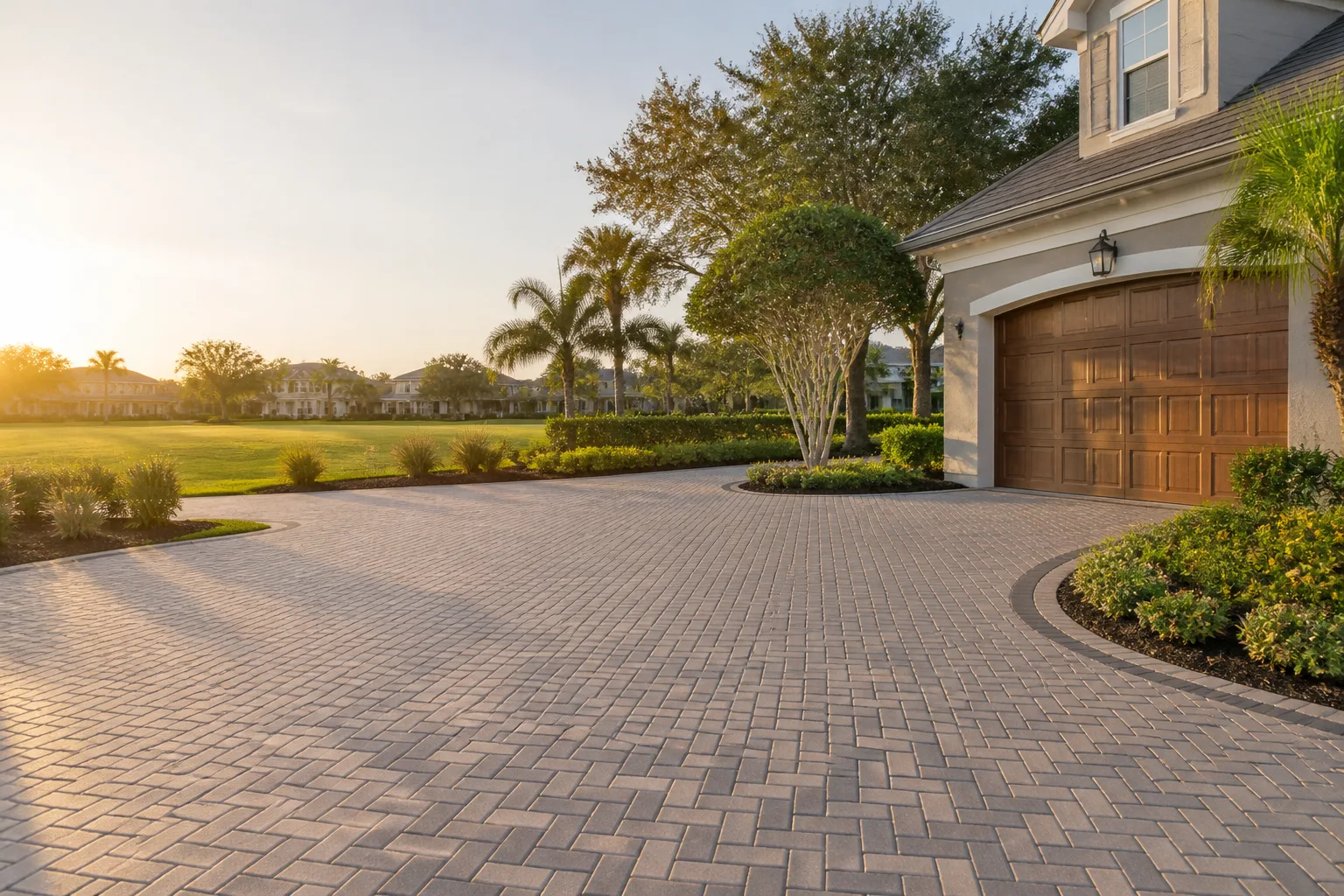
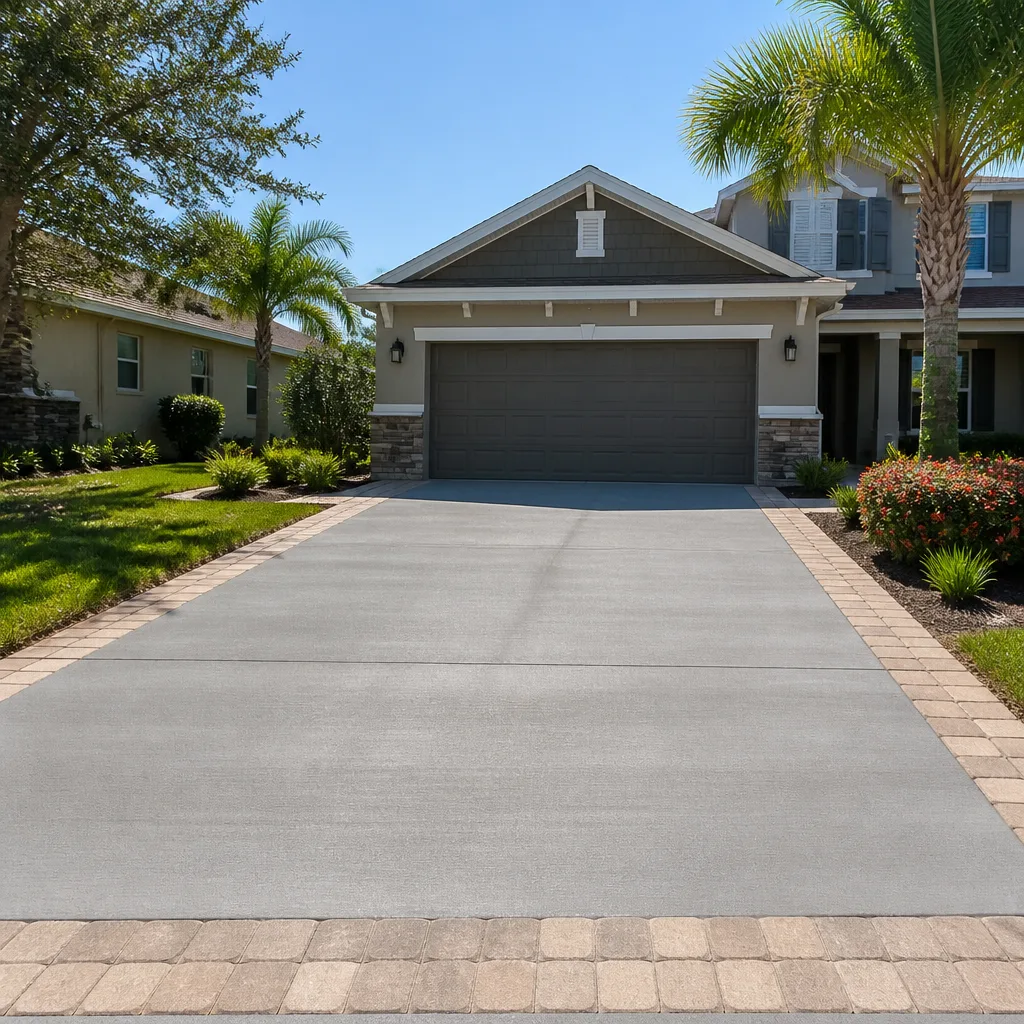
Two other Plano-specific factors matter. First, driveway grades here often have to carry water away from a garage that sits close to the street. Get the slope wrong and the first big rain tells you in the worst way. Second, code-compliant driveway work in Plano is subject to the city’s development standards, and a driveway that ties into a public right-of-way or crosses a sidewalk or utility easement can trigger a permit and inspection. Plan review and inspection exist for a reason. The inspector checks the work that gets covered up, which is the work you can’t check yourself later. If you want the full picture of what a correctly built driveway looks like from the ground up, our Driveway & Pavers in Plano page walks through the materials and the brands we install.
Tools Worth Renting (and What the Rental Actually Costs)
Paver work is more rental-friendly than most homeowners expect. You don’t need to buy a plate compactor to seal and repair a driveway. You do need to rent the right one if you’re touching base or replacing more than a handful of stones.
- Plate compactor. The essential rental. A weekend rental from a Plano-area equipment yard typically runs in the range of $70 to $110, plus the pad. Worth every dollar for any repair that touches base.
- Wet saw or paver saw. If you’re cutting border pavers or replacing a piece near the edge, a wet saw rental runs roughly $60 to $90 for a day. The learning curve is short: a couple of practice cuts on a scrap paver and you’ll be fine.
- Hand tamper. Buy one. Cheap, and genuinely useful for small repairs where a compactor won’t fit.
- Rubber mallet, pry bar, knee pads. Own these. They’re the tools behind every single-paver replacement.
- Laser level or transit. Renting one makes sense if you’re checking grade across a full driveway. Skipping it on a full install is how slopes go wrong.
The realistic picture: a sealing or sand-refresh weekend needs almost nothing rented. A repair that touches base or cuts pavers needs a compactor and possibly a wet saw, and you should budget $130 to $200 in rental for the weekend, plus the time to learn the equipment. That’s a fair trade on a repair. It’s a bad trade against a full installation, where the equipment, the hauling, and the learning curve all argue for a crew that does this every week.
Permits, Inspections, and What Happens at Resale
This is the part homeowners in Plano get burned on most often, and it has nothing to do with how good the work looks. If your driveway work required a permit and you didn’t pull one, the problem surfaces years later when you go to sell.
Driveway work in Plano can trigger a permit and inspection when it ties into the public right-of-way, crosses or alters a sidewalk or apron, changes drainage onto a neighboring property, or involves structural work near the foundation. Whether your specific project needs a permit depends on the scope. That’s a question worth answering before the first shovel goes in, not after. The permit inspector works for you, not for the contractor. That inspection is your record that the base was built to spec and the grade was right.
If you hire out the base and grading, expect the contractor to pull the permit and call for the inspection. It should be written into the contract, not mentioned as a maybe. And if a contractor tells you permits are optional or unnecessary on a job that clearly calls for one, ask them to put that in writing. They usually won’t. When unpermitted work is discovered, the fix can range from a fine and a reinspection to tearing out and rebuilding the section that should have been inspected. Either way, it’s out of your pocket. We pull permits and sign inspections on every eligible job in Plano for exactly this reason: the paperwork is the proof that the hidden work was done right.
How to Read a Contractor Quote Like a Contractor
A paver quote that comes in far below the others usually isn’t a deal. It’s a signal that something got shortened, and the base is the first place price-cutting shows up. Here’s how to read a quote so you can see the difference.
- Look for a written base depth. A serious quote states the excavation depth and the base thickness in inches. A quote that just says “install pavers” is telling you it doesn’t want to be pinned down.
- Count the compaction lifts. Two- to three-inch lifts is the standard. Any quote that doesn’t mention compaction at all is quoting a base you can’t trust.
- Check whether fabric and edge restraint are line items. Both should be there. Missing edge restraint is a common shortcut.
- Confirm the paver and sand brands. You should be able to look up every material on the quote. Belgard and Techo-Bloc pavers are brands you can research and verify, not mystery stone off a pallet.
- Verify the permit is included. If a permit is required for the scope, it should be a line on the quote, not a surprise later.
- Ask what happens if the scope changes. Every allowance and every price change should arrive as a written change order before work moves. An allowance that isn’t on paper is a surprise waiting for a date.
Compare quotes on those six points and the low bid usually reveals itself. If you’re also weighing a fence or a home addition alongside the driveway, the same reading rules apply, and our Fence Installation in Plano and Home Additions & ADU in Plano pages show how we structure those scopes.
Common Mistakes to Avoid
- Going short on base to save money. The most expensive shortcut on any driveway, because you pay for the base twice when the surface fails. This is the single biggest cost driver in Plano clay soil.
- Compacting once instead of in lifts. Dumping the full gravel depth and running the compactor over it once leaves loose material deep in the base. It settles unevenly and takes the pavers with it.
- Skipping edge restraint. Without restraint anchored into the base, the driveway spreads and the joints widen within a few seasons. Small line item, huge long-term difference.
- Getting the drainage slope backwards. Water that should leave the driveway ends up at your garage door or along the foundation. This is a Plano-specific problem because of how many driveways grade toward the street.
- Sealing too soon or too thick. Sealing a new driveway before the pavers have had time to settle, or putting it on too heavy, leaves a cloudy film. Check the manufacturer’s timing and go light.
- Not asking about permits. Unpermitted driveway work can surface at resale and cost you more to fix than pulling the permit would have cost up front.
- Choosing the low bid without reading it. A quote without a base depth, a compaction spec, or a permit line isn’t cheaper. It’s unfinished, and you’re paying for the rest later.
See the difference
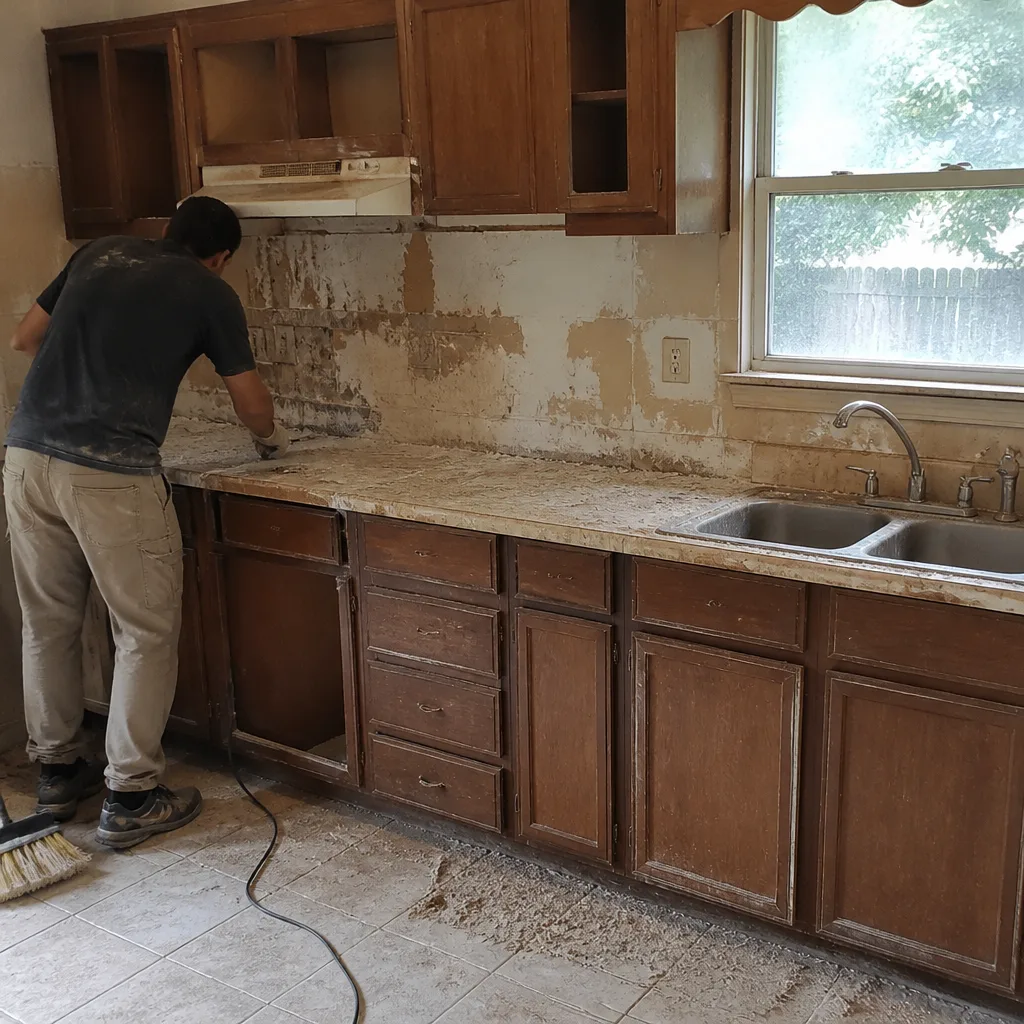 Before
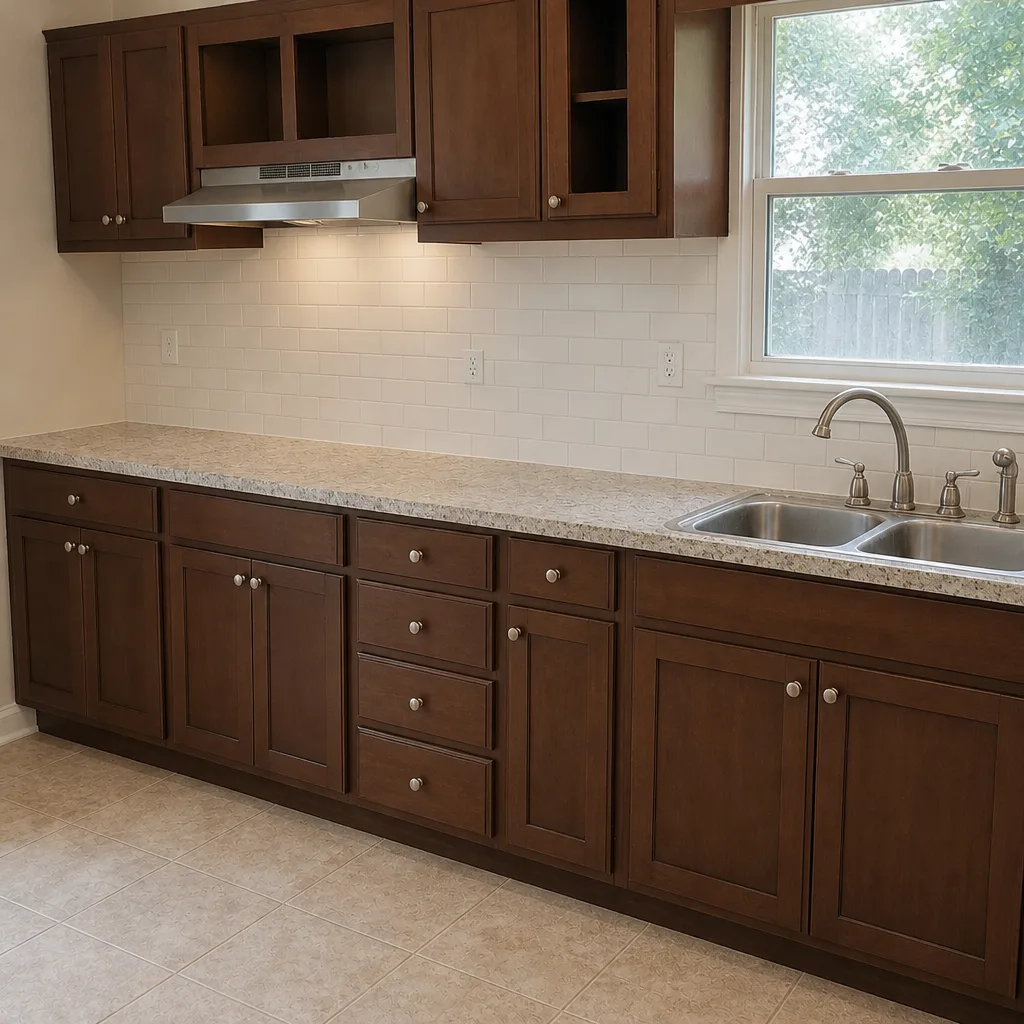 After
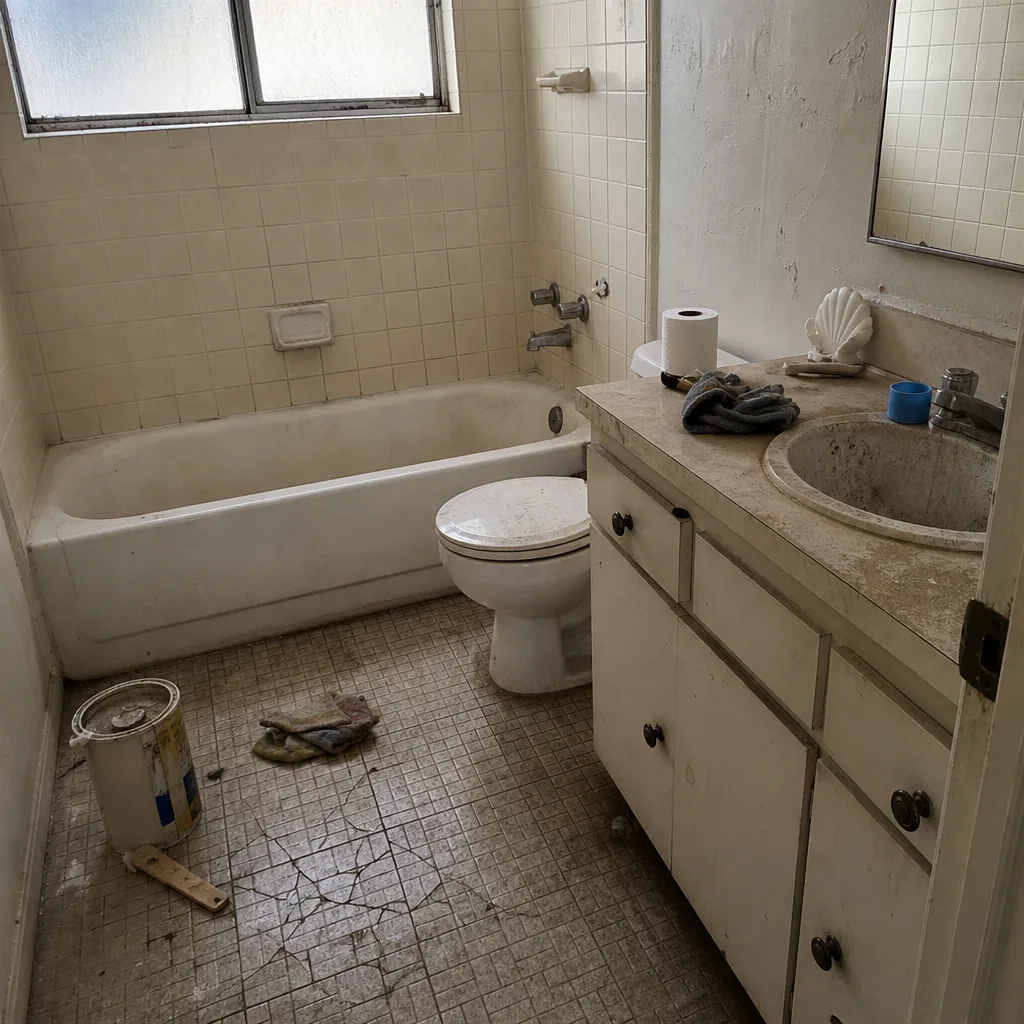 Before
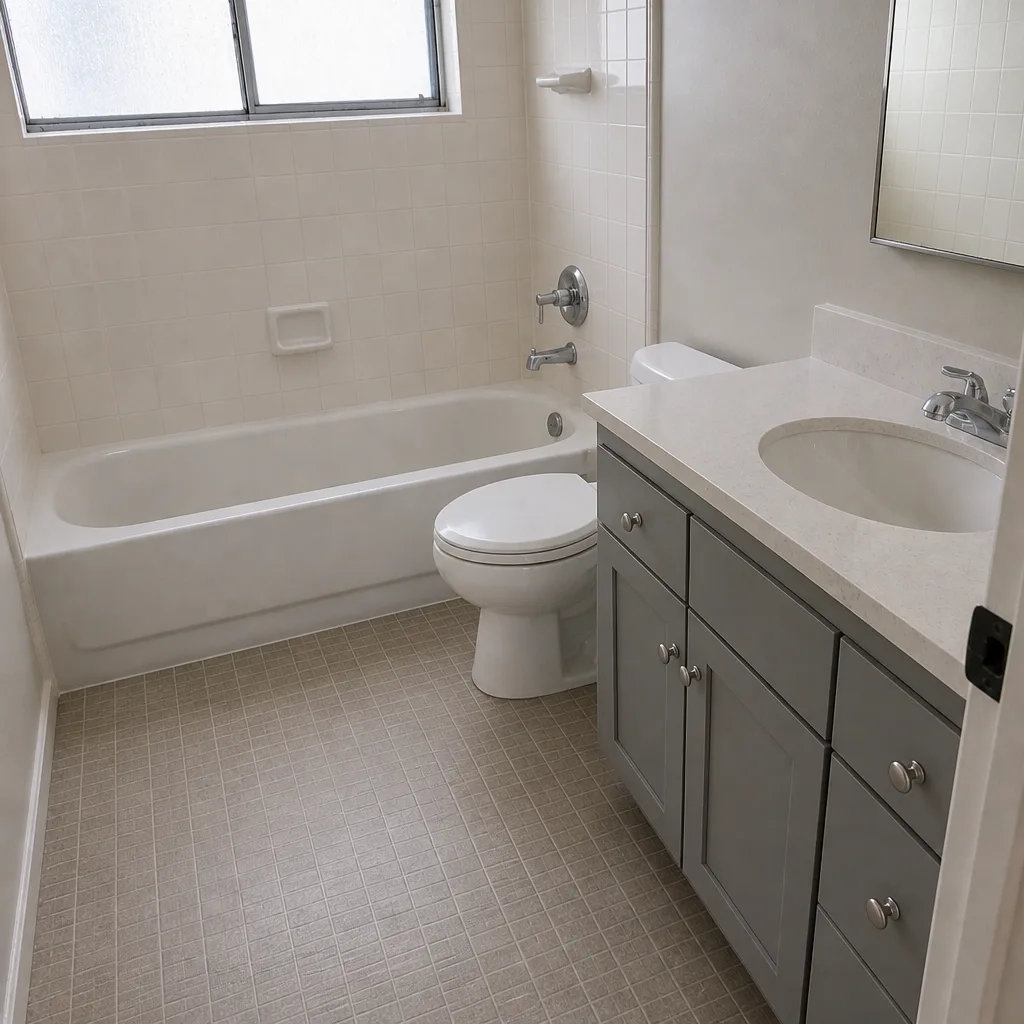 After
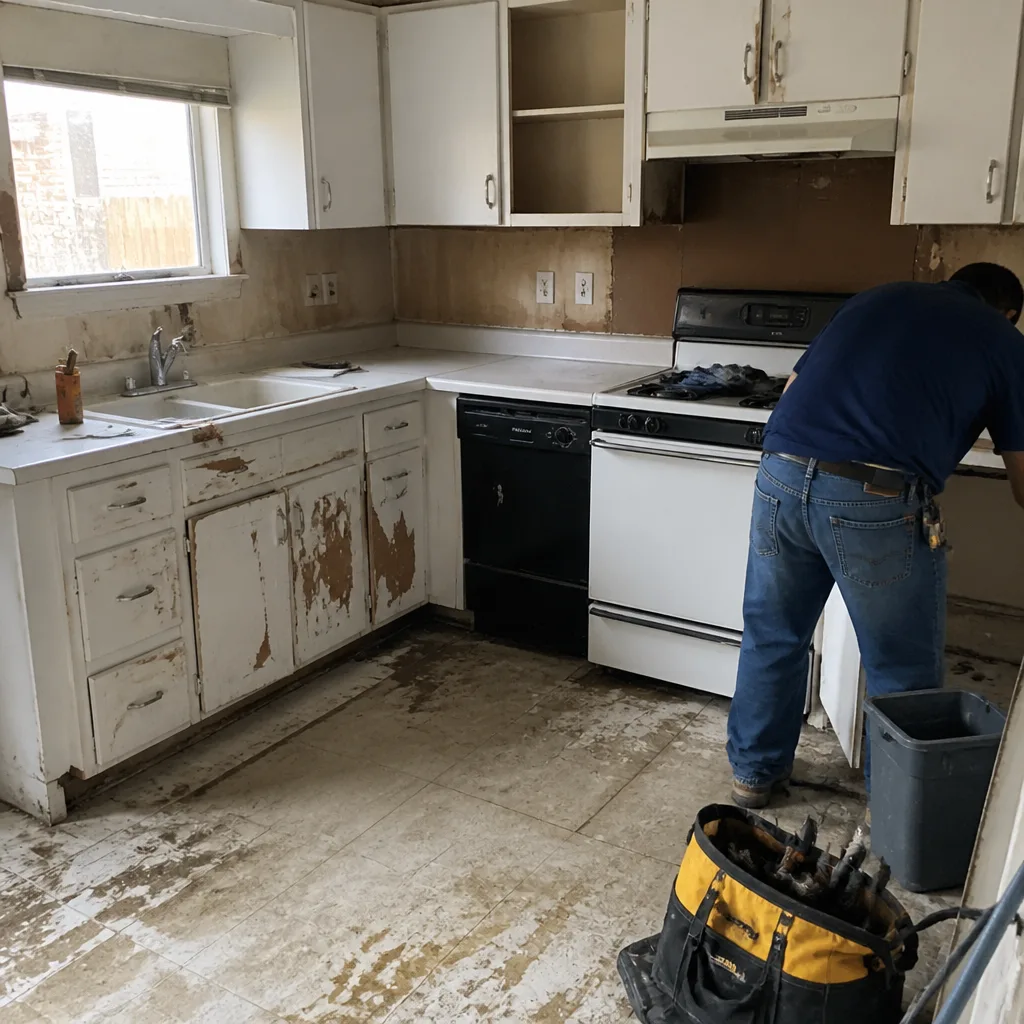 Before
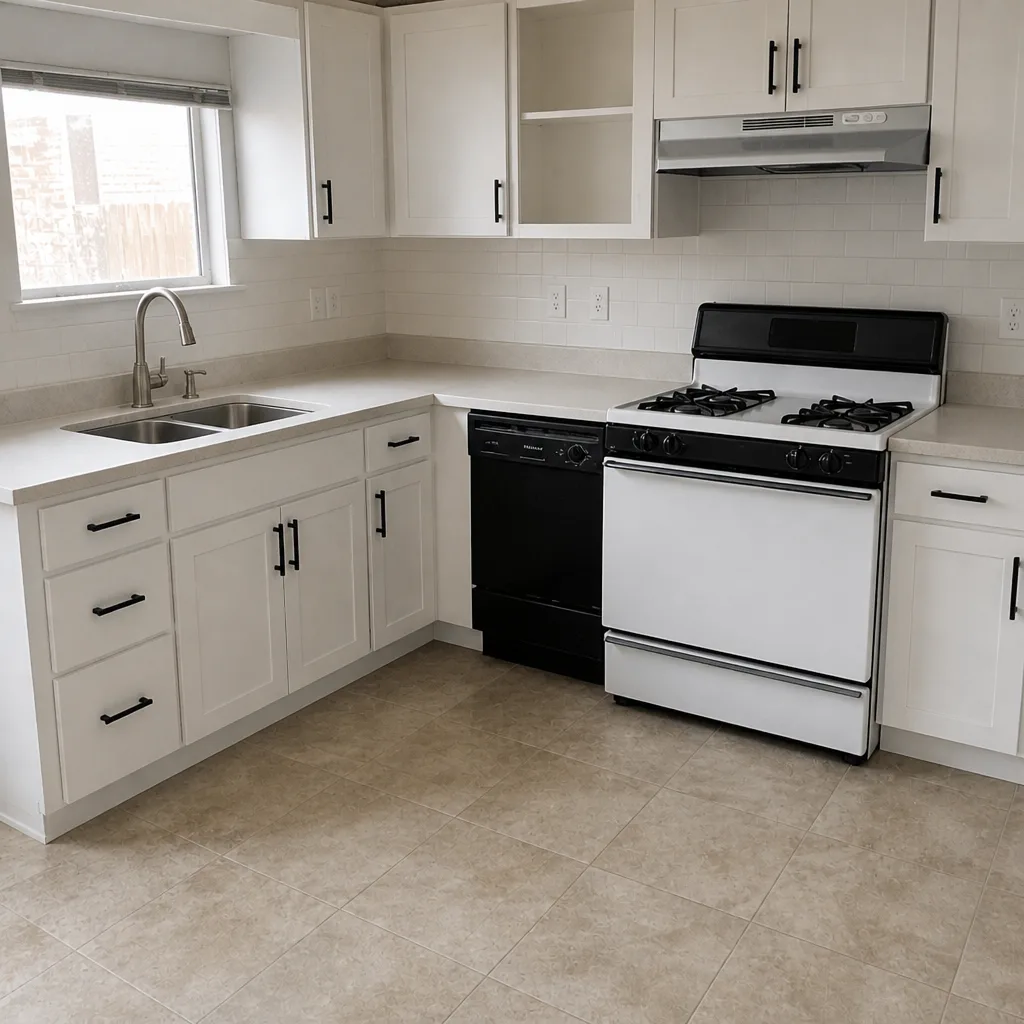 After
When to Call a Professional
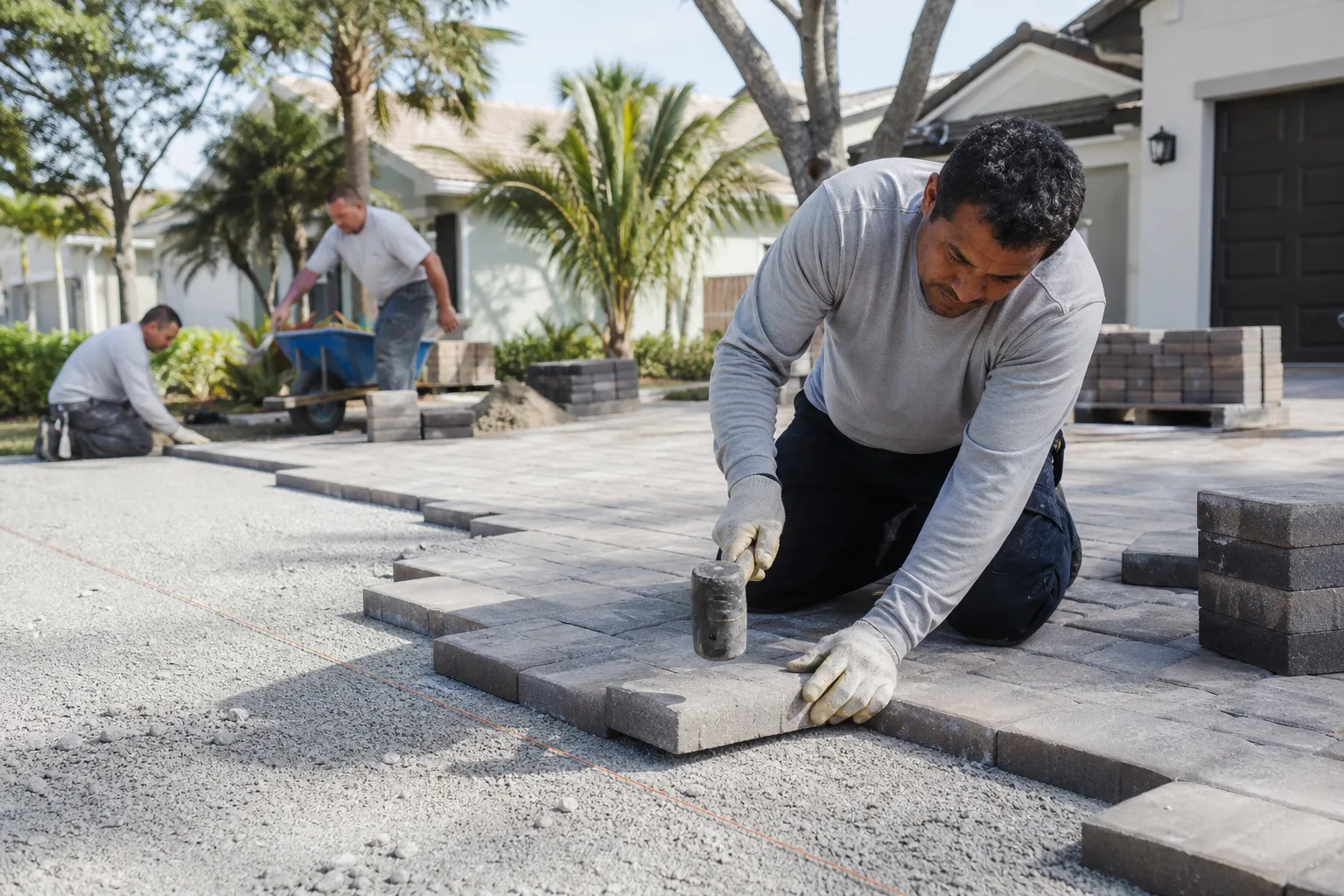
Call a professional whenever the job touches the base, the grading, or the edge restraint, or any time the scope could require a permit. If you’re looking at a full driveway replacement, that’s not a weekend project regardless of how handy you are. The excavation, the compaction, the hauling, and the inspection paperwork together are a crew job. Call a professional too if you see settled sections across a wide area, water pooling toward the house, or pavers that have shifted enough to open joints, because those are signs the original base has already failed and a patch won’t hold.
Barrett & Sons Construction Plano offers free estimates in Plano – call (877) 382-4108. We’ll walk the driveway with you, show you what a correct base looks like in the quote, and tell you honestly which parts of the job you can handle yourself.
Frequently Asked Questions
You can lay pavers, but we don’t recommend building the base and grading yourself in Plano. The clay soil here makes base depth and compaction the deciding factor, and a shallow base doesn’t show its problems until years later. Sealing, joint sand, and single-paver replacements are genuinely safe DIY jobs. Base, edge restraint, and drainage are not.
Most paver driveways in Plano fall in the range of $8 to $18 per square foot for materials and installation, depending on the paver brand, the base depth, and how much site prep is needed. A typical two-car driveway runs roughly $8,000 to $20,000. An unusually low quote is usually a signal of a short base, so read the specs before comparing prices. Call (877) 382-4108 for an exact quote on your driveway – estimates are free.
Not always, but often. Driveway work that ties into the public right-of-way, crosses a sidewalk or apron, or changes drainage to a neighboring property can require a permit and inspection. Check the scope before you start. A contractor who pulls the permit and calls for the inspection gives you a record that the base and grading were built to spec, which protects you at resale.
A rubber mallet, a pry bar, knee pads, and a hand tamper cover most single-paver repairs. If the repair touches base, rent a plate compactor (roughly $70 to $110 for a weekend) and a wet saw ($60 to $90 for a day) if you’re cutting pavers. The plate compactor is the one rental that genuinely makes a difference in how long a repair holds.
Most paver driveways in Plano benefit from sealing every two to three years, depending on the paver finish and sun exposure. Sealing is a safe DIY job: clean the surface, let it dry fully, and apply a light coat with a roller. Avoid sealing a brand-new driveway until the pavers have had time to settle, and never apply it heavy.
At Barrett & Sons, no price change touches the job without a written change order issued before the work happens. Every scope and allowance is in the contract up front. If something underneath the driveway turns out worse than the quote assumed, you get the change order in writing first, and you decide whether to proceed. Call (877) 382-4108 for a free estimate in Plano.
The Bottom Line
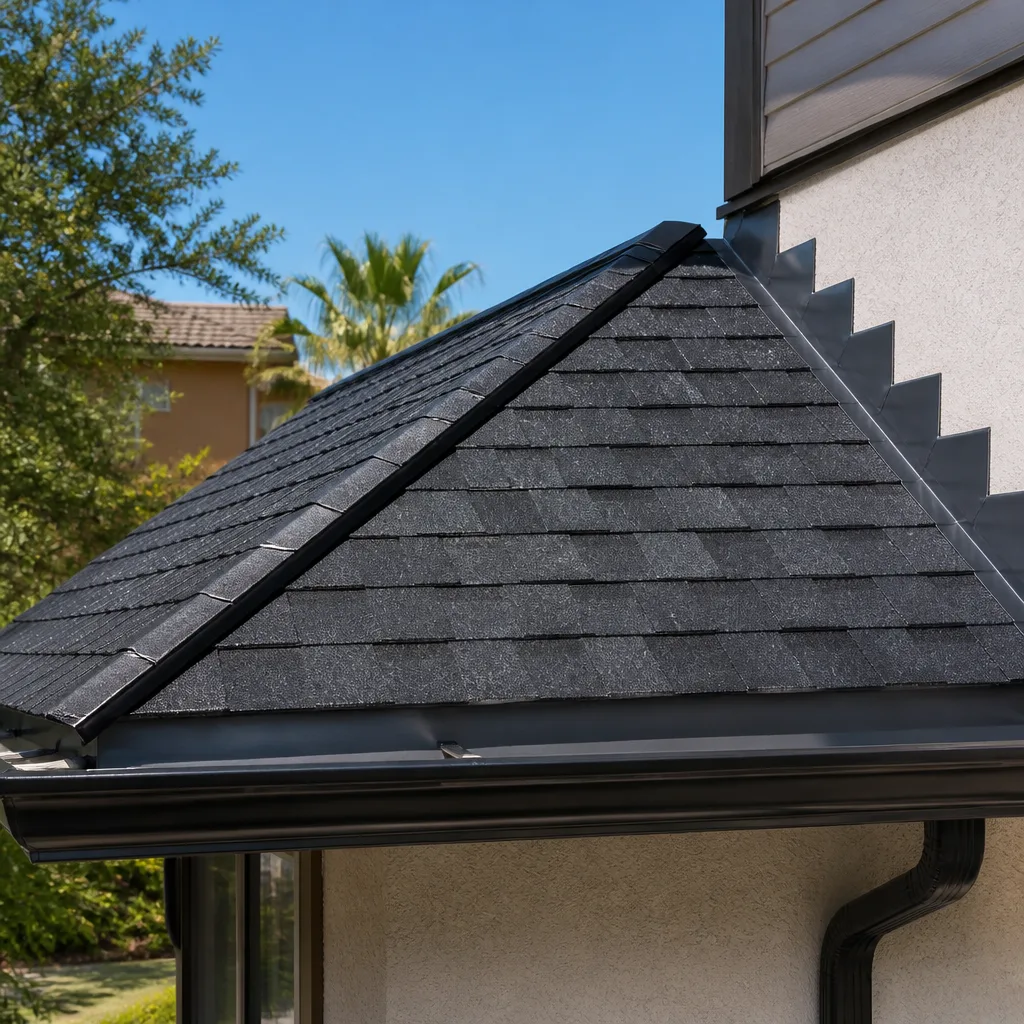
The DIY-versus-professional question isn’t really about whether you can swing a shovel. It’s about which tasks have a low failure cost if you get them wrong. Sealing, joint sand, and single-paver repairs are safe, sensible, and genuinely save you money. Base excavation, compaction, edge restraint, and grading are the tasks where a two-inch mistake turns a $4,000 driveway into a $4,000 driveway you build twice. In Plano, the clay soil makes that gap wider than in most places. If you want the base, grading, and permits handled correctly the first time, our team at Barrett & Sons Construction Plano is a phone call away. Start with the Barrett & Sons Construction Plano home page to see the trades we cover.
Call (877) 382-4108 for a free estimate. A live person answers the phone, we pull permits and sign inspections on every eligible job, and every completed job is backed by our written 90-Day Done Right Promise. Ask anyone on your street – or look up the license number yourself.
Written by the team at Barrett & Sons Construction Plano.