Last updated November 18, 2026

Free written scope consultation - allowances, timeline, and change-order rules on paper before a single trade is scheduled
How Long Does Driveway & Pavers Take? Timelines and What to Expect
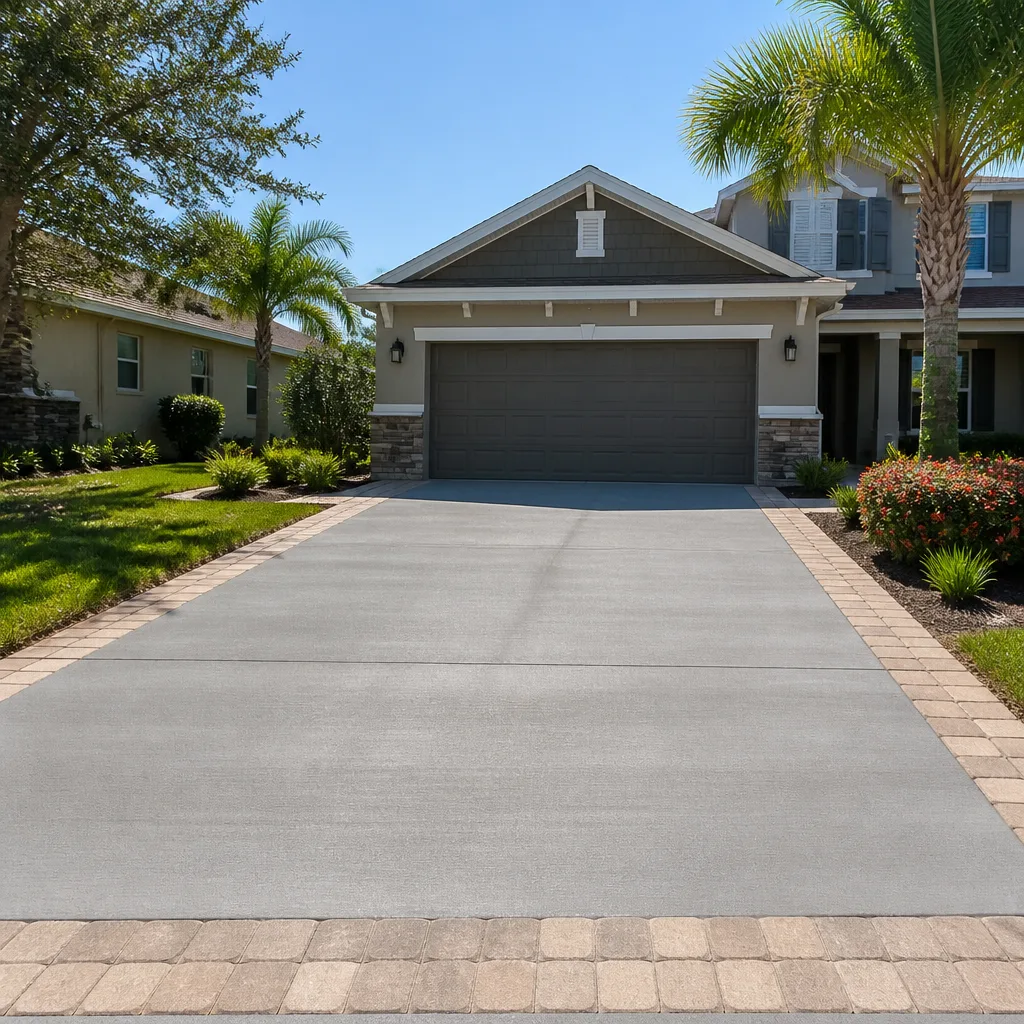
The crew that shows up Day 1 to start your driveway probably won’t be back until Day 3 or 4 – and that’s normal. What looks like a delay is usually a required compaction cure window that can’t be rushed without compromising the base. If a contractor promises a full driveway in two days, ask them what they’re skipping. That’s the honest version of how driveway paver installation goes, and it’s the version we’ll walk through here: a phase-by-phase timeline with realistic day counts, why Plano’s clay soil stretches the schedule, how North Texas weather throws a wrench in it, and what your driveway access and parking look like while the work is happening. If you’ve been quoted a fast, tidy number and want to know what’s actually involved, this guide is for you.
Quick Answer
A typical residential paver driveway in Plano takes 5 to 9 working days from demolition to final joint sand, with most single-car and standard two-car drives landing around 6 days. Add 2 to 6 days of buffer for clay-soil compaction, concrete edge work, and rain holds, which are common in North Texas. Anything quoted under 3 days is usually skipping the base prep that keeps pavers from settling and heaving.
Styles & brands we work with
- Kitchen remodeling
- Bathroom remodeling
- Home additions & ADU
- Roofing
- Windows & doors
- Driveway & pavers
- Fence
Table of Contents
- Phase-by-Phase Paver Driveway Timeline
- Why Plano’s Clay Soil Stretches the Schedule
- North Texas Weather: Rain Holds and What They Cost You
- How Driveway Size, Pattern, and Add-Ons Change the Timeline
- Driveway Access and Parking: What to Expect at Each Phase
- Reading a Fast Quote: What’s Missing From the Schedule
- Common Mistakes to Avoid
- When to Call a Professional
Phase-by-Phase Paver Driveway Timeline
Here’s the honest breakdown every homeowner should ask their contractor to put in writing. A paver driveway is not one job, it’s seven phases, and each one has a minimum time it needs to cure, compact, or set. Cutting those windows is the number one reason pavers sink within a year.
- Demolition and removal (Day 1). Old concrete, asphalt, or gravel comes out, along with haul-off of the debris. A standard two-car driveway produces 15 to 25 tons of rubble. Expect 6 to 10 hours of loud work, plus a dumpster or trailer parked at the curb overnight.
- Excavation and grading (Day 1-2). We dig to a minimum of 8 to 10 inches below finish grade to make room for base, sand, and the pavers themselves. Grading to a 1.5 to 2 percent slope away from the house is essential and is where a lot of skipping happens (see Driveway & Pavers in Plano).
- Base installation and compaction (Day 2-4). Crushed limestone base goes in, 2 to 3 inches at a time, and each lift gets compacted with a plate or roller. This is the phase that cannot be rushed. Compaction of a standard driveway runs 8 to 12 hours of machine time spread across 2 to 3 days so each lift can settle.
- Concrete edge restraint (Day 4-5). A poured or precast concrete edge holds the pavers from spreading. The concrete needs 24 to 48 hours to set before any weight rolls over it.
- Bedding sand (Day 5). One inch of screeded sand sits between base and pavers. Fast work, but it must be perfectly level – sanding takes 3 to 5 hours on a standard drive.
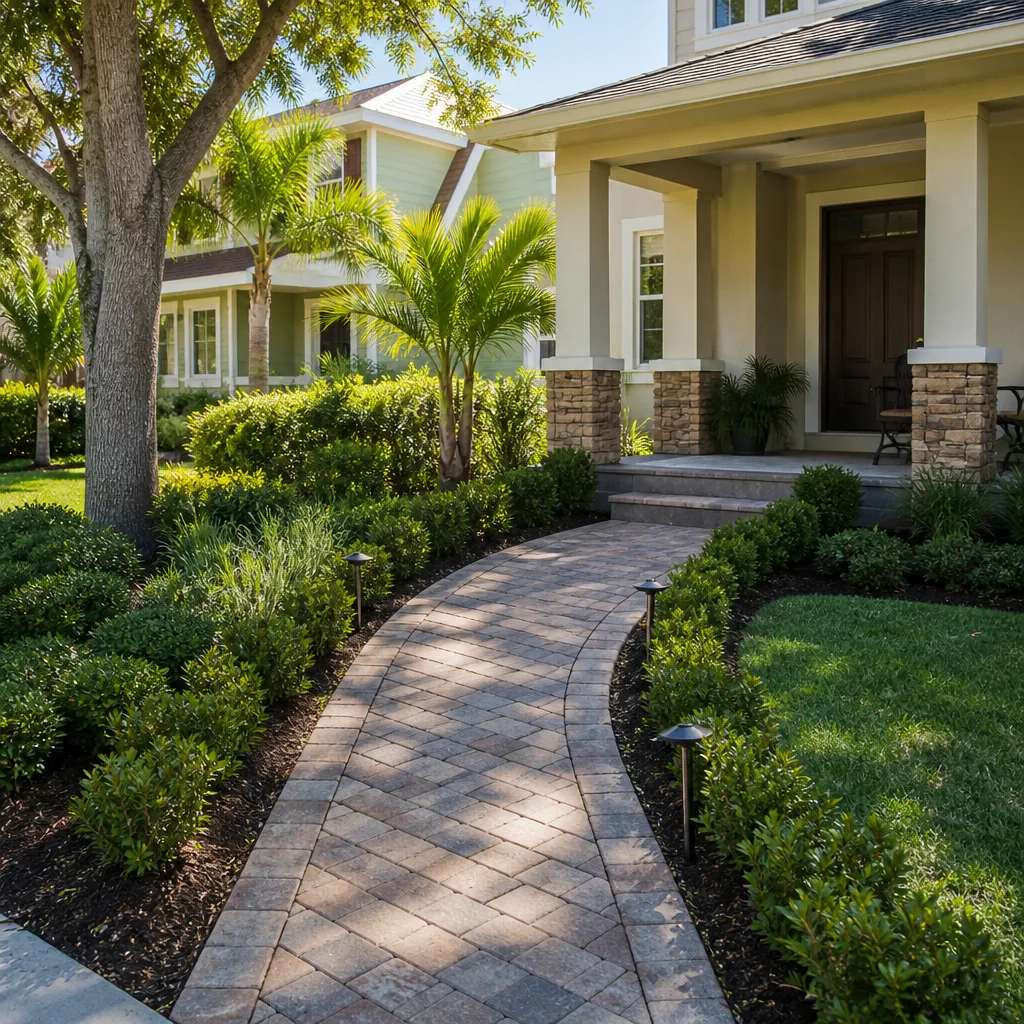
- Paver laying (Day 5-7). This is the visible, satisfying part, and it’s fast compared to what came before. A two-person crew sets 400 to 700 square feet per day depending on pattern. A 600 square foot driveway is one full day, a 1,000 square foot curved drive with borders is closer to 2 days.
- Joint sanding and final compaction (Day 7-8). Polymeric sand goes into the joints, misted and compacted. It needs a dry, warm window to cure – in Plano that’s usually 24 to 48 hours, longer if the humidity is high.
Add a day for cleanup and a final walkthrough, and you land on 5 to 9 working days for a standard residential job. That’s the real answer for how long a paver driveway takes when nobody’s cutting corners.
Why Plano’s Clay Soil Stretches the Schedule
Plano sits on a heavy black and red clay, and clay behaves nothing like the sandy or gravelly soils you’ll see featured on West Coast or desert installation videos. Clay holds water, swells when wet, and shrinks when it dries. That swelling and shrinking is what cracks slabs and shifts pavers, and it’s the reason a proper base here takes longer to build and longer to compact.
Three things change on a Plano clay-soil job compared to a fast-quoted job elsewhere:
- Deeper base. Most local crews build an 8 to 10 inch compacted base where sandy-soil projects use 4 to 6. That’s double the material, double the hauling, and double the compaction passes.
- Longer compaction window. Each 2 to 3 inch lift gets at least one full compaction pass, and the crew waits between lifts for the moisture to stabilize. A rushing crew compacts one pass and moves on – the driveway looks fine for a year, then sags toward the street or does the rooftop-shifting thing near the garage slab.
- Moisture control. If the base is rained on before pavers go down, it needs to dry to the right moisture content before bedding sand goes in. That can add 1 to 2 days to a schedule that was tight to begin with.
Here’s how to tell if a contractor is rushing. Ask them, in writing, how many inches of compacted base they’re installing and how many compaction passes each lift gets. If the answer is vague, or the number is under 6 inches, they’re building a driveway for a different state. In neighborhoods like Willow Bend, Deerfield, and Russell Creek, where mature trees and irrigation add moisture to the soil, we’ve routinely seen a driveway that sagged within 18 months on a 5-inch base get rebuilt properly at 9 inches – and the rebuild took nearly twice as long as the original install. That math is worth understanding before you sign.
North Texas Weather: Rain Holds and What They Cost You
North Texas moves between drought and downpour without much warning, and paver work is weather-sensitive at three specific phases: excavation, base compaction, and joint sanding. A single half-inch rainstorm can turn an excavated clay pit into a mud bowl that takes 24 to 48 hours to dry enough for base work.
What actually happens on a rain hold:
- Excavation phase. If it rains after digging, water pools in the pit. The crew has to pump it out, wait for the clay to dry, and often over-dig and re-compact the top few inches. Adds 1 to 2 working days.
- Base phase. A wet base is fine if it’s not oversaturated – it needs to be at optimum moisture for compaction, which is actually why a light rain can help. A heavy rain interrupts the lift sequence and adds 1 day.
- Paver laying phase. Light rain doesn’t stop setting pavers, but heavy rain and standing water do. A full-day washout in the middle of a lay adds a full day.
- Joint sanding phase. Polymeric sand needs a dry 24 hour window. If it rains after sanding but before cure, the joints can fail and the crew has to pull sand out of the top inch and re-do it. That’s a real 1 to 2 day hit.
In practical terms, a Plano driveway scheduled for late March through May (our wettest stretch) should expect 2 to 4 weather days on the schedule. Do the same project in October or November and your buffer drops to near zero. Ask your contractor how they handle weather holds in the contract – a serious one will tell you the schedule slides, the price doesn’t, and they’ll be back on the first dry day.
How Driveway Size, Pattern, and Add-Ons Change the Timeline
Square footage matters, but it’s not the biggest lever on total project duration. Pattern complexity and add-ons are.
- Square footage. Every 500 square feet of pavers adds roughly 1 day of laying and jointing. A single-car drive (about 300 square feet) can finish laying in half a day. A long rural drive in Fairview or Lucas at 1,500 square feet adds 2 to 3 days.
- Pattern. Running bond (simple staggered) is fastest. Herringbone and basketweave take 20 to 40 percent longer because each paver is set on two axes. A full-drive herringbone in a 900 square foot space can add 1 to 2 days over running bond.
- Borders and inlays. A soldier-course border, a contrasting-color band, or a paver inlay adds time at every phase – cutting, sorting, and extra joint sand. Expect 1 extra day for borders on a standard drive.
- Curved or complex geometry. Curves require cutting at the edge restraint and more hand-fitting of pavers. A curved drive borders the timeline of a much larger rectangular drive.
- Lighting and drainage add-ons. Low-voltage paver lighting and channel drains run under the base, so they have to be installed before compaction and inspected before sanding. Add 1 to 2 days.
When we quote a driveway in Plano, we separate the base and prep window from the finished-look window in writing, so a homeowner can see the real duration before they commit. That’s part of our 90-Day Done Right Promise – the schedule is part of the promise, not an afterthought. If you’re also planning fencing or a garage apron in the same season, we sequence the trades so the driveway base isn’t disturbed. You can see how we approach sequencing on our Fence Installation in Plano page.
Driveway Access and Parking: What to Expect at Each Phase
Nobody tells homeowners this part, and it matters more than you’d think. Your driveway will be unusable for most of the project and partially unusable for weeks afterward.
- Demolition day. Move both cars to the street or a neighbor’s drive the night before. Expect a dumpster or materials trailer parked at the curb for the whole project – on a narrow street in a Plano neighborhood like Custer Park or Windhaven, that can mean no street parking on your side for 5 to 9 days. Check with your HOA on any construction-parking rules before Day 1.
- Excavation and base days. The driveway is a mud pit or a trench. Do not plan on pulling in, even in a 4-wheel-drive. Keep a signed note or text thread with the crew lead so you know which days are truly off-limits.
- Laying and sanding days. The pavers are down but not traffic-ready until the polymeric sand cures. Typically 24 to 48 hours after final sanding. Plan for no vehicle traffic for 2 full days after the crew’s last day, and no washing, pressure-washing, or sprinkler overspray for the first 30 days.
- Cure window. The concrete edge restraint reaches full strength in 7 days. Light foot traffic is fine after 48 hours; heavy vehicles wait the full week.
If you’re having other exterior work done at the same time – a home addition, ADU, or new garage – the driveway access planning gets more involved. We walk through sequencing on our Home Additions & ADU in Plano page so the driveway isn’t finished twice.
Reading a Fast Quote: What’s Missing From the Schedule
When someone quotes you “driveway pavers in two days, cash discount,” ask which of these phases they’re rolling into one:
- They’re skipping the second and third base lifts, which means a thinner base and a driveway that will settle within a season or two of clay movement.
- They’re skipping the concrete edge restraint, which fails the first summer the clay expands.
- They’re using a crushed-stone dust or “recycled” base instead of graded crushed limestone, which does not compact the same way.
- They’re laying pavers over the existing concrete (an overlay) and calling it new. Overlays fail fast in North Texas and are usually pitched as a cheap option.
- They’re not pulling a permit, which in most Plano-area jurisdictions you’ll need for anything that changes the driveway grade or width at the curb. We pull permits and pass inspections on eligible driveway and hardscape jobs, because the inspector works for you, not us.
The point isn’t that fast is always bad. A simple, clean rectangular driveway on stable soil can genuinely turn in 4 to 5 days. The point is that a fast number should match a fast plan – phase by phase – not just a different total. Our Barrett & Sons Construction Plano home page lays out how we quote work in writing from the start, and how our Driveway & Pavers in Plano scope is built. If a quote has one number, one weekend, and no phase-by-phase, that’s the clue.
Common Mistakes to Avoid
- Scheduling around a vacation. If you’re out of town during the install, you can’t move cars, sign change orders, or approve substrate surprises. Be home or on call for the full working window, especially in a Plano neighborhood where the crew needs access to water and power.
- Not confirming the base depth in writing. “We’ll build a proper base” isn’t a scope. “9 inches compacted crushed limestone, 3 lifts” is. Get the number in writing before Day 1.
- Skipping the HOA parking check. Some Plano-area HOAs and municipal rules restrict construction trailers, dumpsters, and street parking. Get written clearance before demolition day, not the day of.
- Watering the driveway during the first 30 days. Automatic sprinklers overspraying a fresh polymeric joint are one of the top reasons we get called back for a joint sand touch-up. Cap or re-aim heads during the cure window.
- Adding a last-minute upgrade mid-project. A paver border or lighting that gets added after base compaction means partially re-digging. Add-ons need to go in the contract – with a written change order – before excavation, not after.
- Assuming weather buffers don’t apply in the dry months. A July thunderstorm can cost a day just like a March one. A serious quote builds in weather days in every season.
- Not asking how heavy vehicles cross the driveway. If a concrete truck or equipment trailer will cross an existing paver approach to reach a home addition project, the timeline needs to include protecting that approach or replacing it after.
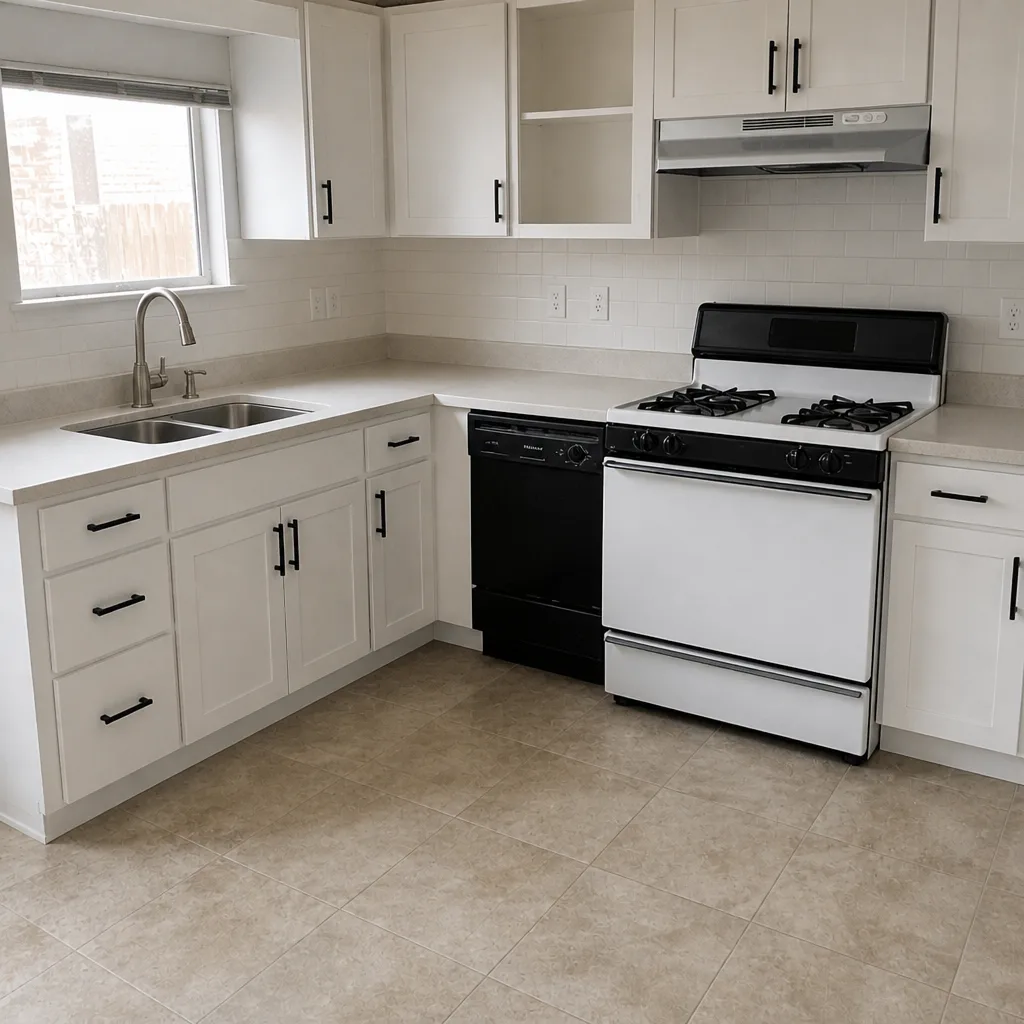
See the difference
 Before
 After
 Before
 After
 Before
 After
When to Call a Professional
Call a professional when the driveway is over a foot of clay, sits at a slope toward the house, needs a new or changed curb cut, or is part of a larger project that involves moving utilities. Call one when you’ve had a previous paver driveway that settled and you want it diagnosed before it’s rebuilt – the cause is almost always a base problem, not a paver problem. Call one when the surface is heaving near a tree, cracking at the edge restraint, or pushing into the garage apron. This is physical labor on a substrate that fails quietly if the base isn’t built right, and it’s not work most homeowners can safely handle.
Barrett & Sons Construction Plano offers free estimates in Plano – call (877) 382-4108. Every scope, allowance, and price change arrives in writing before work happens, and every eligible job is backed by our 90-Day Done Right Promise.
Frequently Asked Questions
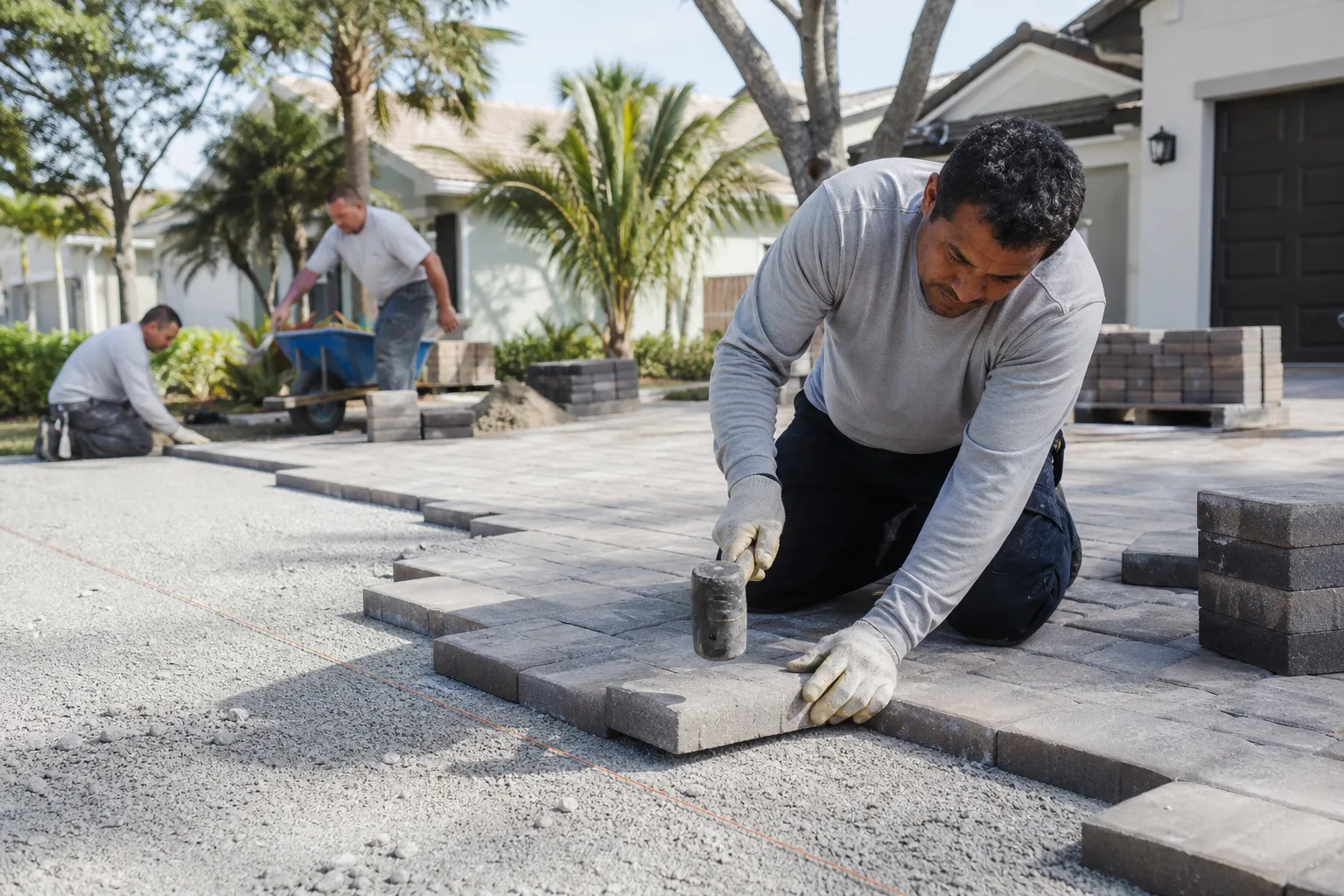
Most residential paver driveways in Plano take 5 to 9 working days from demolition to joint sanding, with 2 to 6 buffer days for clay-soil compaction, concrete edge cure, and rain holds. A standard two-car drive usually lands around 6 to 7 days. Larger or more complex drives (over 1,000 square feet, curved, or with borders and lighting) push toward 9 to 12 days. Call (877) 382-4108 for an exact quote – estimates are free.
That gap is base compaction and substrate cure, not a delay. Between demolition and paver laying, crushed limestone base goes in 2 to 3 inch lifts and each lift must stabilize before the next one compacts on top. Rushing that window is the number one cause of settlement. A short schedule with no gap is a warning sign, not a selling point.
Yes. Plano’s heavy clay requires a deeper compacted base (8 to 10 inches versus 4 to 6 in sandy-soil areas) and each lift takes longer to stabilize. That’s roughly 1 to 3 extra days compared to a comparable job and it’s the single phase where cutting corners hurts the most.
We don’t recommend overlays for Plano driveways. The existing slab is already subject to the same clay movement that cracks concrete slabs, and pavers on top of a moving slab fail within a season or two. A full removal and proper base install takes longer but lasts decades, and it’s the version that passes inspection.
Typical installed pricing in the Plano market runs roughly $14 to $22 per square foot for a standard driveway, with premium pavers (Belgard, Techo-Bloc) and specialty patterns pushing the upper end. A standard 600 square foot driveway usually lands between $9,000 and $13,000 including demolition, base, edge restraint, and joint sand. Call (877) 382-4108 for an exact quote – estimates are free.
Only if the scope changes, and only with a written change order issued before any work proceeds. A hidden substrate issue (buried concrete, improper previous fill, drainage problem) is the most common reason for a change order on a Plano driveway. The allowance that isn’t on paper is a surprise waiting for a date, which is why every allowance goes in writing up front. If an undocumented surprise comes up, you hear about it before we touch a shovel. Call (877) 382-4108 for a written, line-item estimate.
Yes, when a permit is required for the scope, we pull it and pass the inspection. That usually applies when the driveway swale, grade, or curb cut changes. Our crews pull permits and get inspections signed on every eligible job because the last contractor told most homeowners permits were optional, and that’s a problem waiting for a resale.
The Bottom Line
A paver driveway in Plano is a 5 to 9 working-day project, with the base and cure phases taking up more of the schedule than the visible paver-laying phase. If a contractor promises less, they’re likely skipping a base lift, an edge restraint, or the cure window – the exact three things that keep a clay-soil driveway flat for decades. Weather holds add days in wet seasons and can show up in dry ones. Ask for a phase-by-phase schedule in writing, ask about base depth in inches, and check the permit. That’s the whole conversation, and it’s the one we have on every driveway we scope.
Get a free estimate from Barrett & Sons Construction Plano – call (877) 382-4108. A live person answers the line, and every quote comes in writing with a 90-Day Done Right Promise behind the work. You can look up our license number before you sign, and we’d rather you did.
Written by the team at Barrett & Sons Construction Plano.