Last updated November 18, 2026




Free written scope consultation - allowances, timeline, and change-order rules on paper before a single trade is scheduled
Bathroom Remodeling Warning Signs Every Homeowner Should Know
A soft spot near the toilet base isn’t a cosmetic problem. It’s a rotted subfloor that’s been wet for months, and by the time it feels soft underfoot, the repair bill has already tripled. That’s the hard part about bathrooms: the water damage almost always starts somewhere you can’t see, behind tile or under vinyl, and it works quietly until one day the floor gives or the ceiling below stains. Most of the expensive bathroom problems we see in Plano announced themselves weeks or months earlier. The homeowners just didn’t know what they were looking at. This guide names the specific signals that mean “stop using that bathroom today,” the ones that mean “call someone this week,” and the ones you can watch for another month.
Quick Answer
The three warning signs that mean stop and get a professional eyes-on inspection are a soft or bouncy floor around the toilet or tub, mold that keeps returning to the same corner after cleaning, and loose or hollow-sounding wall tile with cracking grout lines. Cosmetic wear like discolored caulk or a dull grout line is usually a weekend fix. Structural signs – movement, moisture, recurring mold – point to a water source or framing problem behind the surface, and those get more expensive every month you wait.
Styles & brands we work with
- Kitchen remodeling
- Bathroom remodeling
- Home additions & ADU
- Roofing
- Windows & doors
- Driveway & pavers
- Fence
Table of Contents
- Cosmetic Wear vs. Structural Warning Signs: Know the Difference
- The Ten-Minute Self-Check: Tile, Grout, and Subfloor Moisture
- Bad Original Workmanship vs. Normal Aging
- What Mold Location Tells You
- Floor, Framing, and the Signs You Shouldn’t Ignore
- Plano-Specific Warning Signs: Climate, Age, and Code
- Questions to Ask a Contractor Once You’ve Spotted a Sign
- Targeted Repair vs. Full Remodel: How to Decide
Cosmetic Wear vs. Structural Warning Signs: Know the Difference
Here’s the line that matters most. Cosmetic wear is surface-level and doesn’t threaten the structure of the room. Structural warning signs mean water or movement has gotten into the framing, the subfloor, or the wall cavity, and the problem is spreading even when the bathroom looks fine.
Cosmetic wear – usually a DIY re-caulk or re-grout:
- Caulk around the tub or sink that’s discolored or peeling but the surface underneath is solid
- A dull or slightly stained grout line with no cracking and no movement underfoot
- Chipped or dated tile with a firm, solid backing
- Faded finishes on fixtures
Structural warning signs – stop and call someone:
- A floor that flexes, bounces, or feels soft near the toilet, tub, or shower
- Loose wall tile – press on it; if it moves or sounds hollow, the thinset has failed
- Cracking grout that reappears in the same line within weeks of repair
- Mold that returns to the same spot after cleaning
- Staining or bubbling paint on the ceiling directly below the bathroom
- A musty smell that doesn’t go away with ventilation
- Water staining, rust, or a mineral crust on the shutoff valves or supply lines
A soft spot near the toilet isn’t the wood going bad that day. It’s the result of a wax ring that failed months ago and a slow leak that soaked the subfloor. By the time you feel it, you’re not looking at re-caulking. You’re looking at pulling the fixture and replacing subfloor, and often the finish floor along with it.
The Ten-Minute Self-Check: Tile, Grout, and Subfloor Moisture
You can assess a bathroom’s condition yourself in about ten minutes with no tools beyond a screwdriver, a flashlight, and a dry paper towel. Do this before anyone comes to quote you. Knowing what you’re looking at protects you from being sold a full remodel when a targeted repair will do – or from being told a soft floor is “just cosmetic.”
- The tap test on wall tile. Tap each tile with your knuckle or the handle of a screwdriver. A crisp, solid sound means the thinset is holding. A hollow thud means the bond has failed, and water can get behind the tile.
- The press test on grout and caulk. Press the grout lines at every change of plane (floor to wall, tub to wall). Any give means the joint is no longer sealed. Run your fingertip along the caulk at the tub edge – it should be firm, not gummy or crumbling.
- The bounce test on the floor. Walk slowly around the toilet, tub, and shower base. Feel for flex or a soft spot. A floor that gives under your weight means moisture has reached the subfloor or the joists have moved.
- The underside inspection. If the bathroom sits over a crawlspace or unfinished basement, look up at the ceiling below with a flashlight. Dark staining on the subfloor or ceiling below the wet wall means water is getting through. In Plano, most two-story homes have a ceiling below the bathroom – check the drywall for bubbling or rings.
- The valve check. Look behind the toilet at the supply line and shutoff valve. Rust, green-white crust, or dampness around the nut means the valve or line is weeping.
- The sniff test. Close the bathroom door for an hour, then walk in. A persistent musty smell points to moisture trapped in a wall or subfloor, not just a damp towel.
If two or more of these checks fail, don’t wait. A Plano homeowner we worked with had a tile wall that passed the tap test but failed the floor bounce near the shower. Hidden behind the tile was a rotted band joist where a shower pan had been leaking for a year. The floor test was the only thing that caught it before the framing got worse.
Bad Original Workmanship vs. Normal Aging
This distinction matters more than homeowners realize, because it changes who pays to fix it and what kind of repair you need. Normal aging looks like even wear – faded caulk, worn grout, a dated tile pattern. Bad workmanship leaves a signature that shows up much earlier than it should and often predicts a specific kind of failure.
Signs you’re looking at bad original workmanship:
- The shower pan was built flat instead of with the slight slope code requires – water puddles in the corners and doesn’t drain. That flat pan causes recurring leaks at the seams.
- The backer board wasn’t installed or was the wrong type behind tile – look for tile on greenboard drywall in a wet area, a shortcut that fails in a few years.
- The toilet was set on an uneven subfloor or a failed flange – the wax ring leaks early, and the floor around the base softens.
- No permit was ever pulled. In Plano, bathroom remodels with plumbing or electrical changes require a permit. If the work was done without one, there’s no inspection record, and any hidden problem is yours to discover. We regularly find a vent installed by a prior plumber that wasn’t connected correctly – it shows up as a slow drain or a gurgle in a second sink.
- Waterproofing was skipped or done with the wrong product behind tile – a leak that starts high in the wall happens fast with poor waterproofing.
When the failure traces to bad workmanship, the fix is often to redo the affected area properly, and the cost should reflect a real repair. When it’s normal aging, a refresh – re-caulk, re-grout, replace a fixture – may be all you need. Knowing which one you’re facing stops you from paying remodel prices on an aging issue or convincing yourself a botched install will hold.
What Mold Location Tells You
Mold is a symptom, not the problem. Where it grows tells you what kind of moisture source you’re dealing with, and that’s the whole point – cleaning it without finding the source just buys you a few weeks.
Surface mold in the corners of the ceiling or the grout lines usually means high humidity and poor ventilation. A slightly undersized exhaust fan, a fan not run long enough after a shower, or a drain that lets humidity sit is often the culprit. It’s an airflow and moisture-management issue, and it’s usually manageable with better venting and a routine cleaning.
Mold that keeps coming back in the same spot – the same corner of the shower, the same line of wall behind the toilet – means there’s an active water source feeding it. That’s not a cleaning problem. It’s a slow leak, a failing caulk joint, a porous grout line letting water into the wall, or a plumbing drip behind the surface. In Plano, the humid summers make this worse, and the air conditioning running hard can mask the smell inside a sealed bathroom. Wet the corner, dry it, and see if it returns within ten days. If it does, stop cleaning and find the source.
Mold on the wall behind the toilet or near the floor often traces back to a weeping supply line, a leaking wax ring, or condensation from a poorly insulated wall. In a Plano bathroom that backs to an exterior wall, condensation behind the wall can cause this even without a leak. The right fix depends on which one it is, and that’s a ten-minute inspection with a moisture meter, not a full remodel.
Floor, Framing, and the Signs You Shouldn’t Ignore
Water damage in a bathroom follows a predictable path: it starts at the wet wall or the fixture, soaks into the subfloor or the tile backer, and then finds the ceiling below. The floor is your early warning system. A toilet that rocks when you sit on it means the flange is loose or the wax ring has failed. A tub that flexes means the subfloor has softened underneath it. A tile floor that shows a hairline crack spreading from the toilet base means the floor beneath is moving.
We’ve seen the pattern in Plano more than once: a homeowner puts off a soft spot near the shower for a few months, then the ceiling below starts to stain. By the time the ceiling shows water, the joists have been wet long enough to need sistering, and the repair has moved well past a tile job. The inspector the permit pulls in is usually the one who confirms it – and it’s worth knowing that in Plano the permit inspector works for you, not for the contractor. That’s one reason we pull permits on every eligible job.
Plano-Specific Warning Signs: Climate, Age, and Code
Plano’s climate and housing stock give bathroom problems a local shape. Newer Plano neighborhoods built in the 1990s and 2000s are now 20 to 30 years old – exactly the age when original bathroom plumbing, shower pans, and supply lines start to fail. In older areas like Downtown Plano and the neighborhoods near the original town square, we see more galvanized plumbing still in service and tile set over materials we wouldn’t use today.
The Texas heat and humidity matter too. Plano summers push air conditioning hard, and a bathroom that stays cool and closed up can hold moisture against exterior walls. We also see more slab-on-grade issues in certain Plano neighborhoods, where a leak under the slab shows up first as a swelling baseboard or a shampoo bottle that won’t sit flat because the floor has moved slightly.
Code-wise, Plano follows the region’s plumbing and building codes, and a bathroom remodel with new plumbing or electrical work requires a permit and inspection. If you’ve spotted a sign and the previous work had no permit on record, that’s worth knowing before you buy the house or sign a repair estimate. We pull permits and get inspections signed on every eligible job in Plano because it’s the only way to know the work is right. You can also learn more about Barrett & Sons Construction Plano and how we handle projects.
Questions to Ask a Contractor Once You’ve Spotted a Sign
Once you’ve confirmed a warning sign, the next ten minutes with a contractor decide whether you get a targeted repair or a full remodel pitch. Ask these before anyone starts measuring.
- “What do you think the water source is, and how will you confirm it before tearing anything out?” A good answer names a moisture meter reading and a specific test. A vague answer means they’re guessing.
- “Can you give me a scope in writing before I commit?” Every scope, allowance, and price change should arrive as a written change order before work happens. You should never see a surprise invoice at the end, because an allowance that isn’t on paper is a surprise waiting for a date.
- “Will you pull the permit, and will the inspection cover the plumbing and electrical?” If the answer is “we usually don’t bother,” walk.
- “Is this a repair or a remodel, and what’s the difference in cost and timeline?” A contractor who can price both options for you is being straight. One who only quotes the remodel is selling.
- “What’s your guarantee, and is it in the contract?” Our 90-Day Done Right Promise is written on every contract, not buried in fine print – if it’s not done right, one call brings us back.
Ask for a free second opinion on any written estimate you’ve already received. It costs nothing and gives you a read on whether the first quote was reasonable. We offer that to Plano homeowners precisely because so many of them have been burned by a phone quote that didn’t match the final bill.
Targeted Repair vs. Full Remodel: How to Decide
Most bathroom warning signs do not require a full remodel. A failed wax ring, a leaking supply line, a cracked shower pan, or a single area of failed grout is a targeted repair – pull the fixture, fix the source, replace the affected subfloor and finish, reinstall. That’s often a fraction of the cost of gutting the room. A full remodel makes sense when the failure is widespread, the plumbing is at the end of its life, the layout no longer works for you, or the same area has failed more than once because the original installation was wrong.
The decision comes down to three things: how many systems are involved (plumbing, waterproofing, framing), whether the failure is contained, and whether you’re fixing a problem or changing a room. A repair fixes a problem. A remodel changes the room. Don’t let a soft spot talk you into a new vanity unless you wanted one anyway. And don’t let a cosmetic refresh hide a structural leak.
If you’re weighing a larger change like an added bathroom or a converted space, our Home Additions & ADU service in Plano is where that conversation starts. If your bathroom sits off a driveway that’s also showing its age, Driveway & Pavers in Plano covers that side of the property. And if you’re evaluating the outside of the house alongside the inside, Fence Installation in Plano rounds out the exterior work we handle.
Common Mistakes to Avoid
- Cleaning mold without finding the source. If it returns to the same spot within ten days, it’s not a cleaning problem – it’s a moisture source, and no bleach kills that.
- Treating a soft floor as cosmetic. A soft spot near the toilet has usually been wet for months, and it doesn’t get cheaper by waiting.
- Accepting a phone quote. In Plano we see far too many homeowners handed a final bill that doesn’t match the phone call. Scope in writing, allowances in writing, change orders in writing – before work.
- Assuming permits are optional. Bathroom work with plumbing or electrical changes needs a permit in Plano. A contractor who says otherwise is passing the risk to you.
- Skipping the ten-minute self-check before you call. The tap, press, and bounce tests tell you what kind of problem you have, and that keeps you from being upsold.
- Ignoring a ceiling stain below the bathroom. By the time water shows through the drywall below, the joists have usually been wet long enough to need more than a patch.
- Picking the lowest bid on a water-damaged bathroom. The bottom bid usually assumes the hidden damage isn’t there. Ask what happens when it is.
See the difference
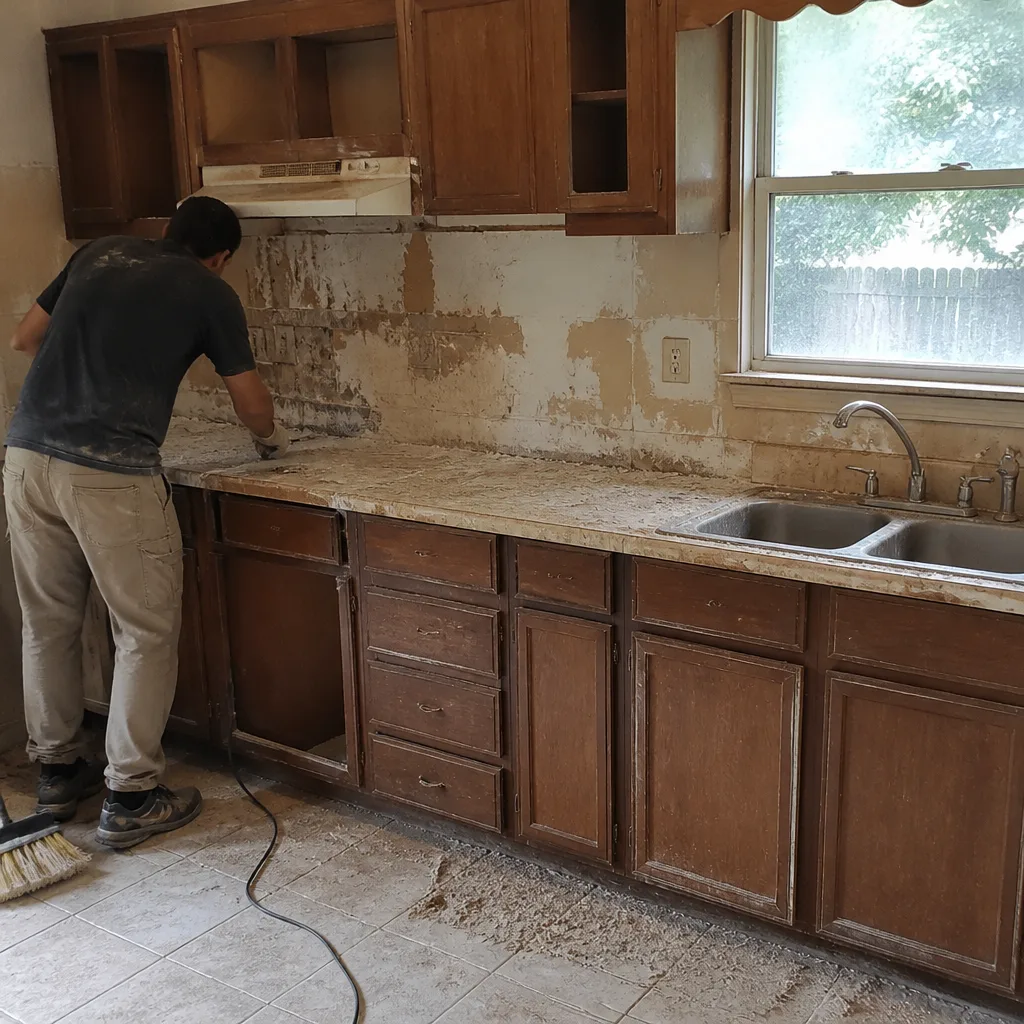 Before
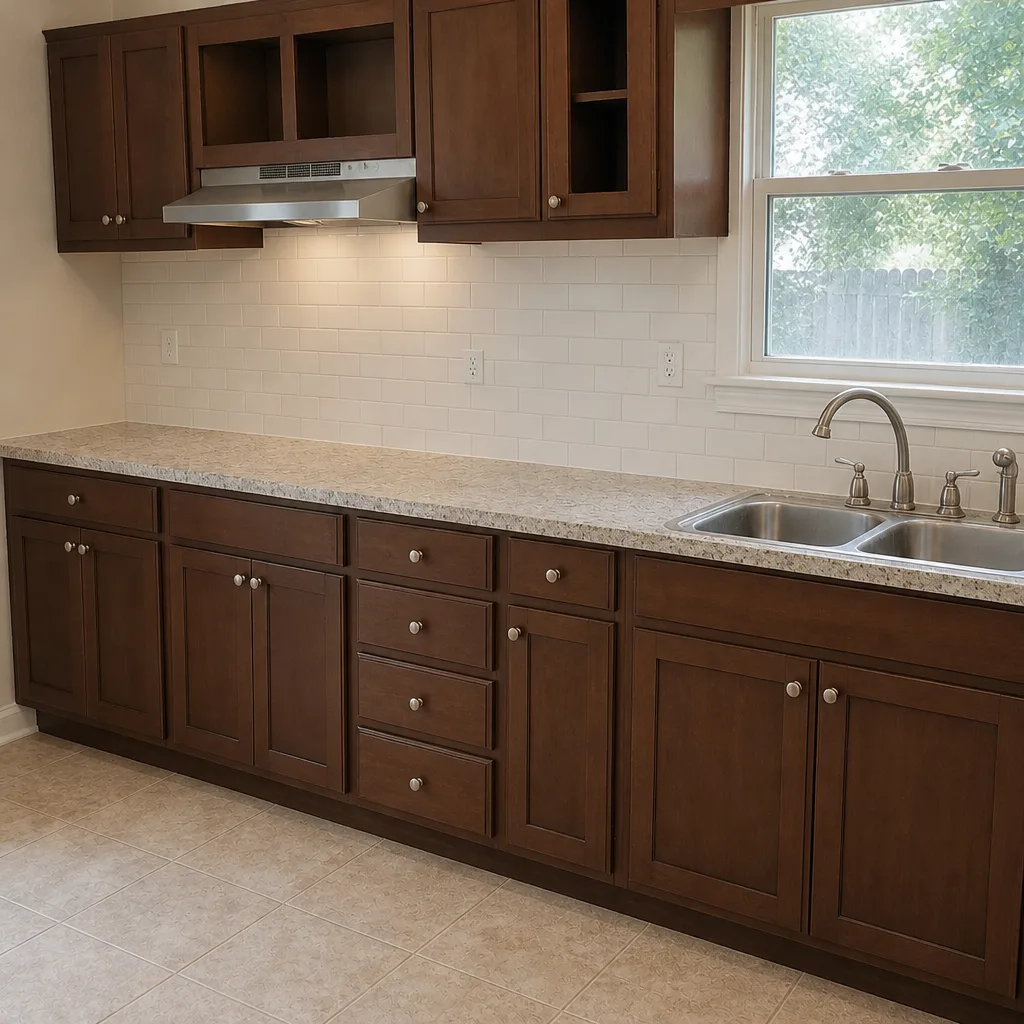 After
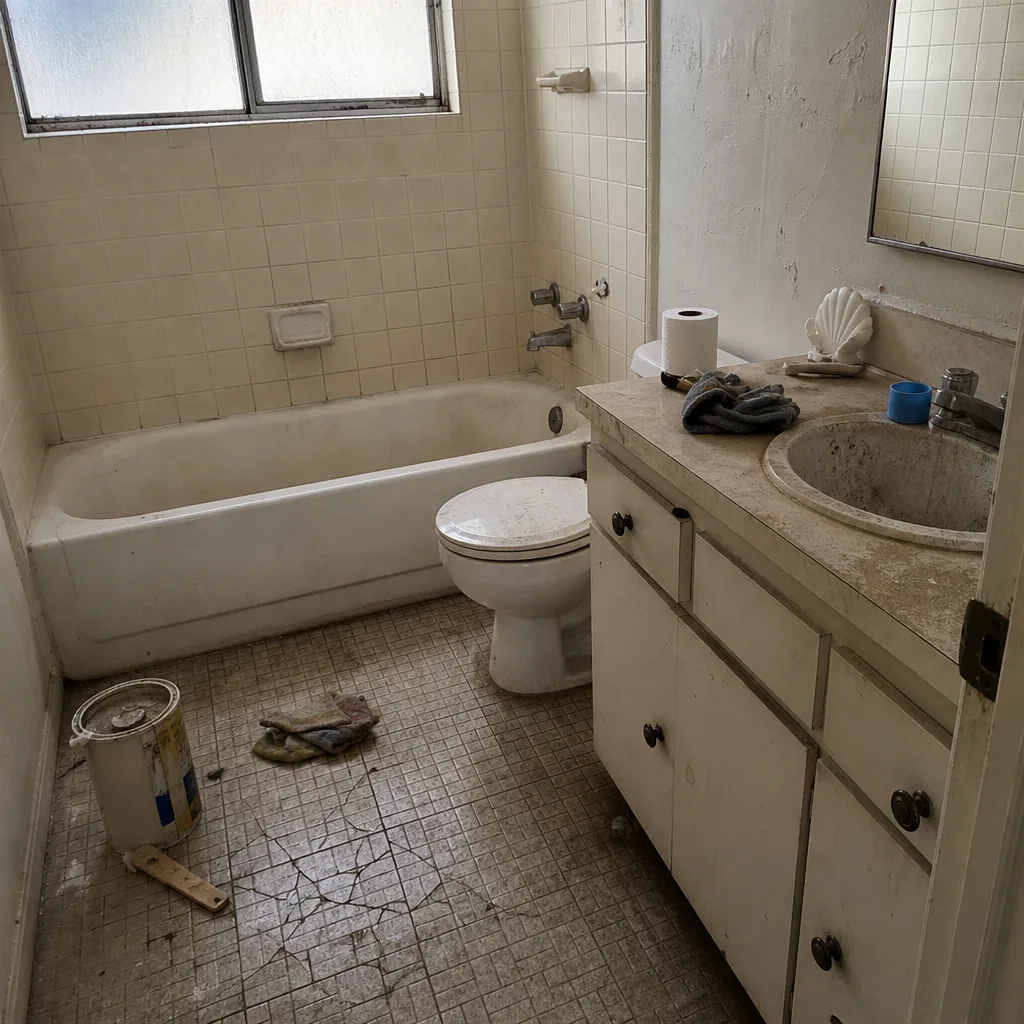 Before
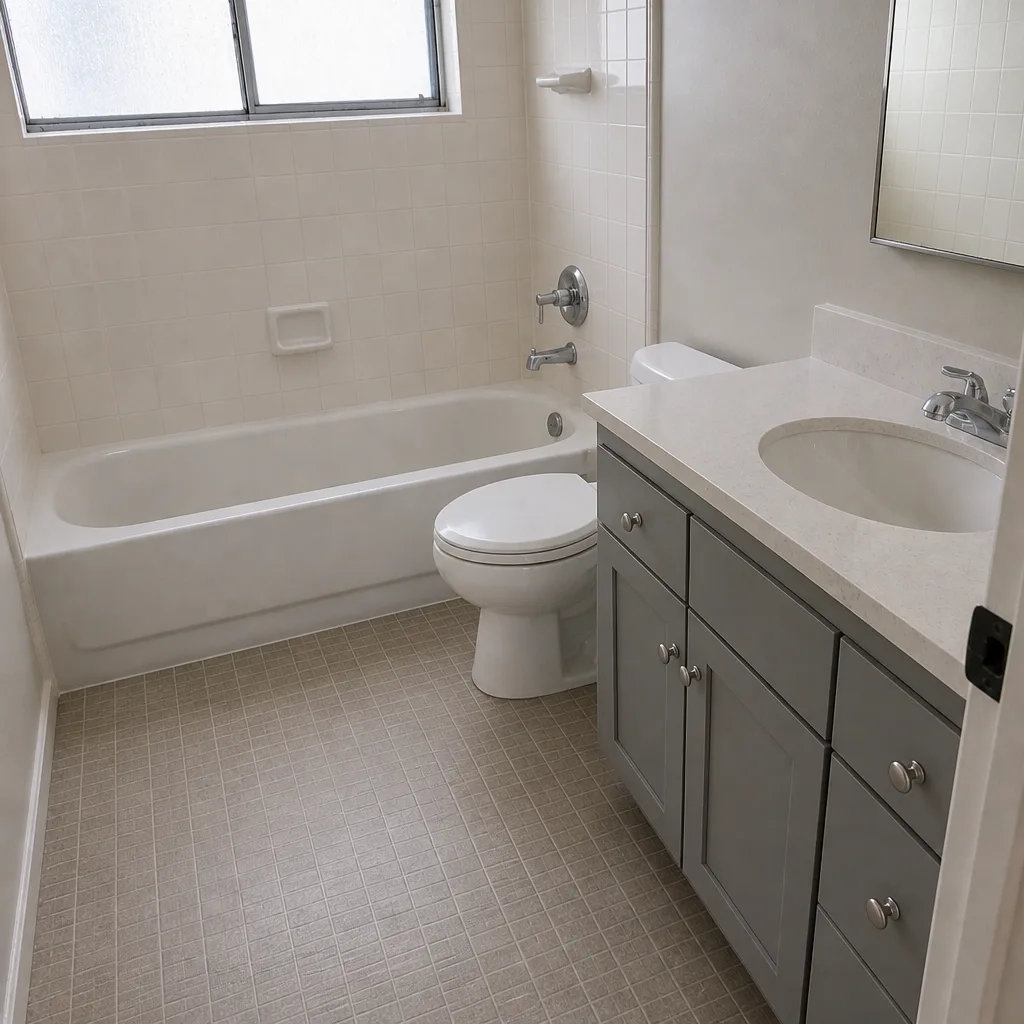 After
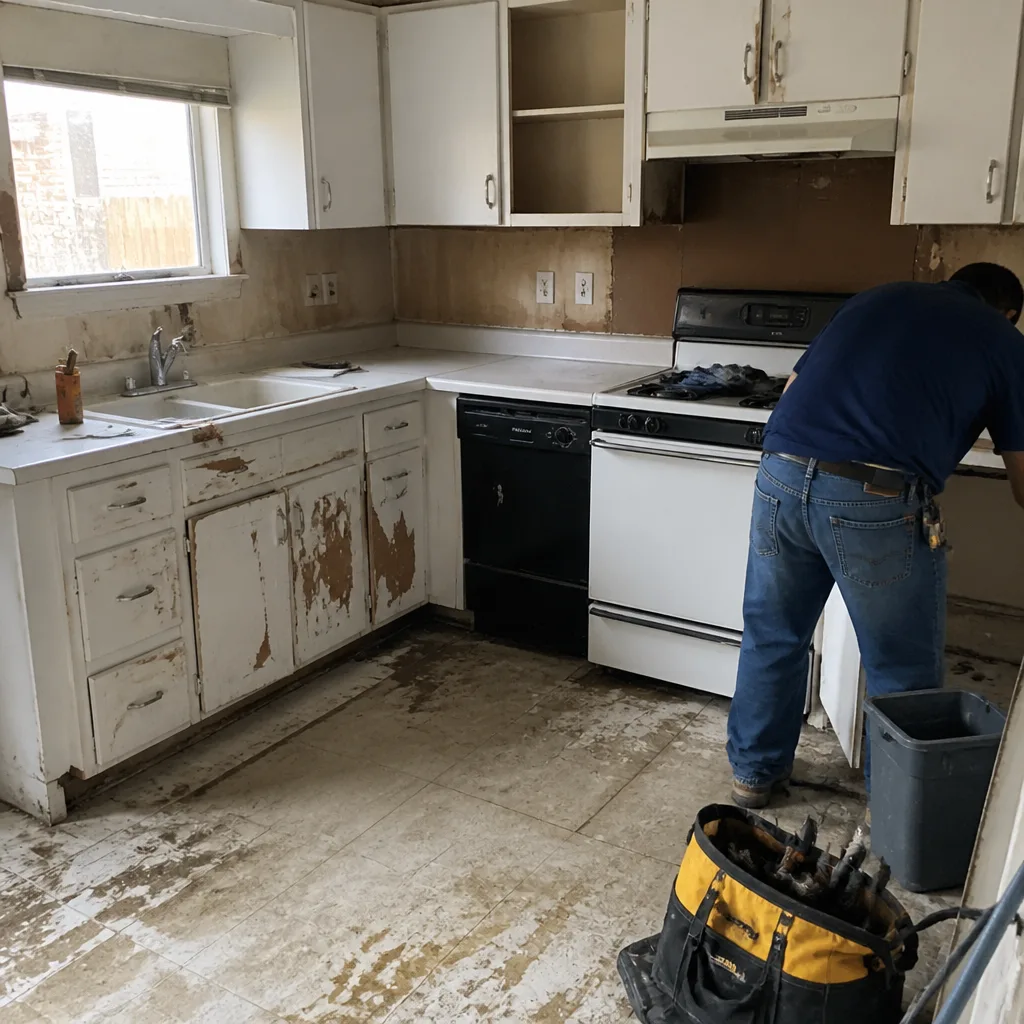 Before
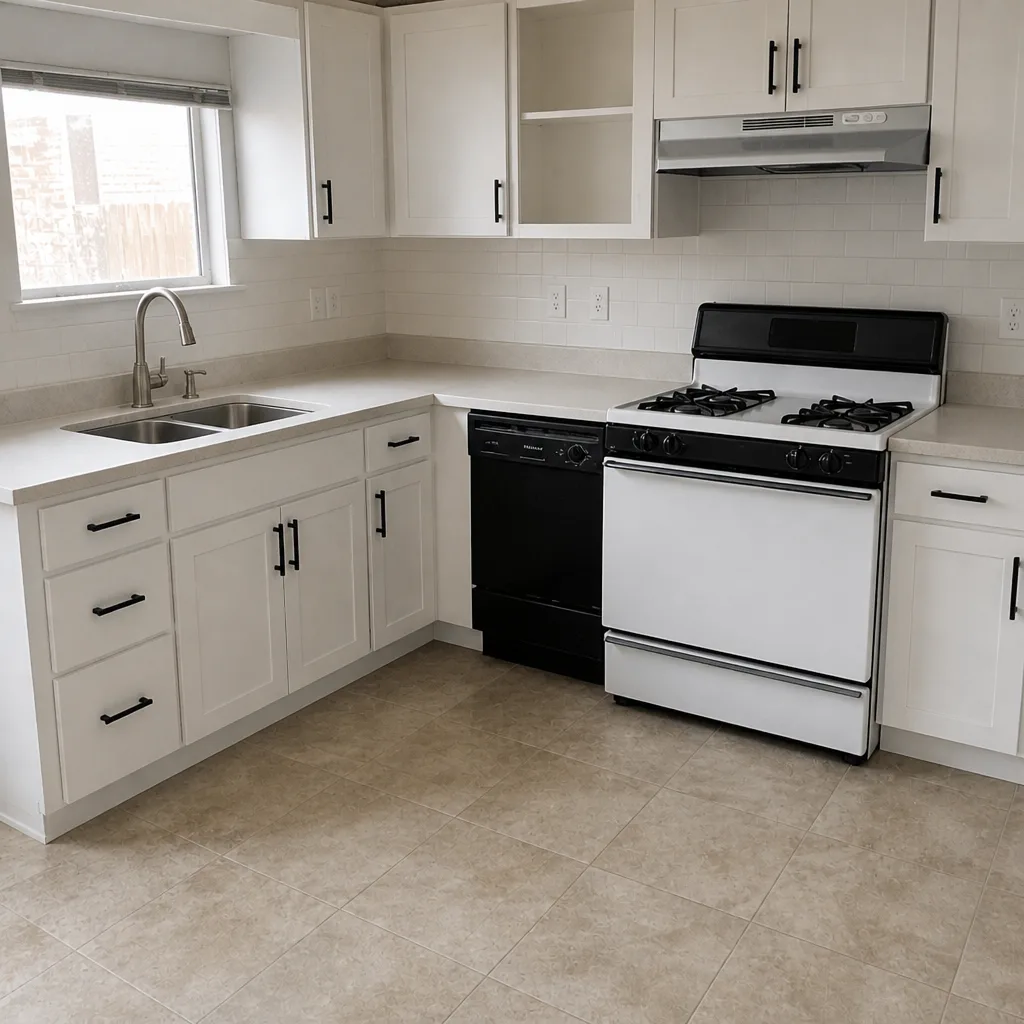 After
When to Call a Professional
Call now if the floor around the toilet or shower flexes, if mold keeps returning to the same corner, if tile sounds hollow or moves when you press it, if the ceiling below the bathroom stains or bubbles, or if a shutoff valve is weeping. Those are structural signs, and a ten-minute inspection with a moisture meter confirms what’s behind them. Watch it for a month only when the issue is cosmetic – discolored caulk, a dull grout line, a dated fixture with solid backing. Everything else gets worse and more expensive with time.
Barrett & Sons Construction Plano offers free estimates in Plano – call (877) 382-4108. A live person answers the phone 24 hours a day, seven days a week. We’re owner-operated, we pull permits and get inspections signed on every eligible job, and our 90-Day Done Right Promise is written on every contract.
Frequently Asked Questions
If the floor flexes or feels soft near the toilet base, it’s serious and you should stop using that bathroom until it’s inspected. A soft spot almost always means a failed wax ring or supply line has been leaking into the subfloor for months. By the time you can feel it, the repair has usually grown past a simple fix. Call (877) 382-4108 for a free estimate in Plano.
No. Mold that keeps returning to the same corner after cleaning is a moisture source problem, not a cleaning problem. It means water is getting into the wall or subfloor and feeding it. A moisture meter inspection confirms what’s behind the surface. Call (877) 382-4108 – the estimate is free.
Any bathroom work that changes plumbing or electrical usually requires a permit and inspection in Plano. A targeted repair that only replaces a fixture or re-caulks may not. We pull permits and get inspections signed on every eligible job because the inspector who confirms the work is the one who works for you. Call (877) 382-4108 with questions about your job.
A targeted repair – pulling a fixture, fixing the source, replacing affected subfloor and tile – usually runs a fraction of a full remodel. The number depends on how far the water traveled and whether framing is involved. We give written, line-item estimates before work starts. Call (877) 382-4108 for an exact quote.
Hollow or loose wall tile means the thinset bond has failed and water can get behind the tile. That’s a structural warning sign, not cosmetic wear. Press on the tile – any movement or hollow sound means it needs attention before the wall cavity gets wet. Call (877) 382-4108 to have it checked.
Not without a written change order. Every scope, allowance, and price change should arrive in writing before work proceeds. An allowance that isn’t on paper is a surprise waiting for a date. That’s why we put it in writing up front. Call (877) 382-4108 to schedule your free estimate.
The Bottom Line
Most bathroom problems give you a warning. A soft floor, a hollow tile, mold that keeps coming back to the same spot, a ceiling stain below the bathroom – those are the early signals, and they mean call a professional now, not next season. Cosmetic wear like discolored caulk or a dull grout line is a weekend fix. Do the ten-minute self-check, know which category you’re facing, and ask for scope in writing before anyone starts. That’s how you avoid both a surprise invoice and a small leak that turns into a framing repair. In Plano, we’ve seen how quickly the second one happens. If you’ve spotted a warning sign, call (877) 382-4108 for a free estimate – a live person answers, day or night.
Written by the team at Barrett & Sons Construction Plano.